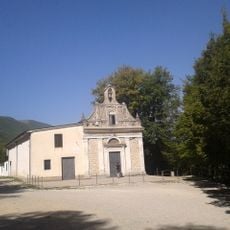
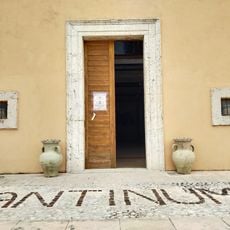
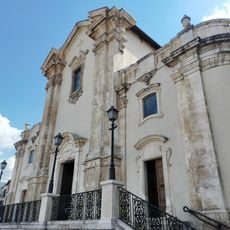
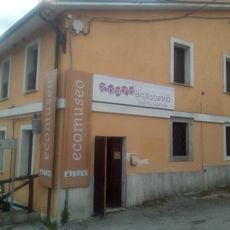
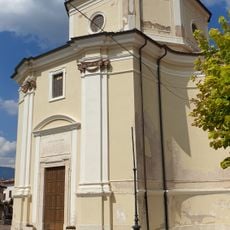
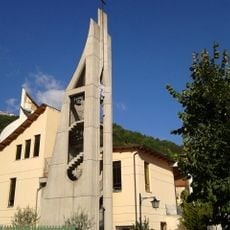
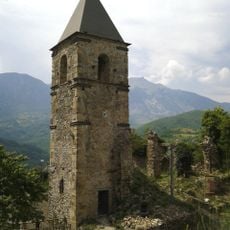
Antinum, Archaeological site in Civita d'Antino, Italy.
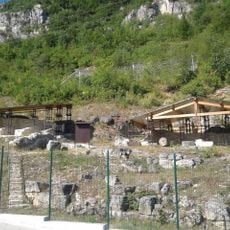
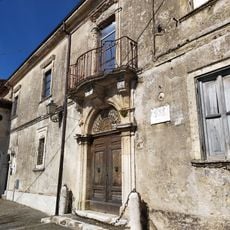
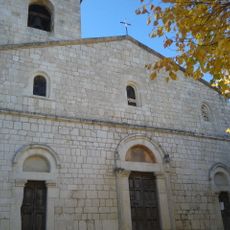
Antinum is the ancient Marsic town whose site lies under today's Civita d'Antino, in the Roveto valley. About 1,300 metres of polygonal limestone walls from the first half of the 5th century BC survive on all sides except the east, where sheer gorge cliffs formed the defence. Inside, two late-Republican opus reticulatum walls are known as the Terme; the forum, between the church of Santo Stefano, Palazzo Ferrante and the north gate, is lost.
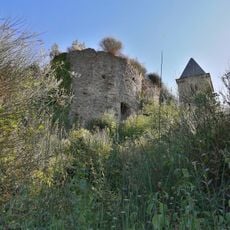
Antinum was a major centre of the Marsi, an Italic people, from the first millennium BC until its subjection to Rome in the late 4th century BC. It then became a Roman municipium whose inhabitants were called Marsi Antinates, and it developed without interruption over the following centuries. In the Middle Ages its acropolis was turned into a citadel built around the tower later known as the Torre dei Colonna, in the historic centre of present-day Civita d'Antino.
The Marsi Antinates left inscriptions in the Marsic language, including the Bronze of Antino, a dedication to the goddess Vesuna found at the site or nearby. The name Antinum survives in today's Civita d'Antino, and the medieval Colonna tower rose on the ancient acropolis.
The site sits at 904 meters elevation, meaning sturdy footwear and time for exploration are needed. Visitors should know that remains spread across the terrain and walking can be demanding.
Among the finds at Antinum is the Bronze of Antino, an inscription in the Marsic language dedicating an offering to the goddess Vesuna. It is one of the few written records of the Marsi, an Italic people absorbed by Rome in the late 4th century BC.
The community of curious travelers
AroundUs brings together thousands of curated places, local tips, and hidden gems, enriched daily by 93,601 contributors worldwide.