Archaeological Area of Poggio del Molino, Archaeological park in Piombino, Italy
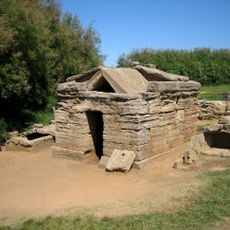
The Archaeological Area of Poggio del Molino is an excavation site in Piombino situated on an elevated coastal plateau with remains from multiple periods. The site contains structures for living and working, along with bathing facilities that show how Romans organized their settlements by the sea.
The hill was occupied in the Late Bronze Age (11th–10th century BCE), when a village with a necropolis of about fifty globular and biconical urns stood between Villa del Barone and Poggio San Leonardo. After a gap, the eastern slope was enclosed in the 1st century BCE by a stone-and-mortar wall around an iron-smelting workshop, dated by black-slip pottery and a silver coin of Calpurnius Piso. At the end of the 2nd century CE a luxury villa with baths replaced it; in the early 4th century poorer rooms were built over the ruins, and a 5th-century burial pit cut through a mosaic floor.
The name Poggio del Molino comes from the Torre nuova del molino, a coastal watchtower with a mill built on the slopes by Cosimo I de' Medici in the first half of the 16th century, as recorded in the Bandita di Porto Baratti map. On the summit stands the Villa del Barone, built in 1923 by Baron Luigi De Stefano and Assunta Vanni Desideri.
The site is accessible on foot with pathways connecting different excavation areas, and its coastal setting makes visiting comfortable during warmer months. Bring appropriate footwear and prepare for uneven ground and areas exposed to the sun.
Rectangular basins discovered here suggest that workers produced a fermented fish sauce that was highly sought after by wealthy Romans. This specialized production reveals the site was not merely a residence but a center for manufacturing a premium trade item.
The community of curious travelers
AroundUs brings together thousands of curated places, local tips, and hidden gems, enriched daily by 92,640 contributors worldwide.