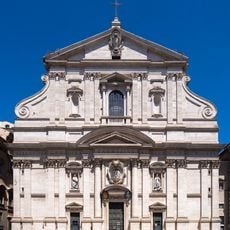
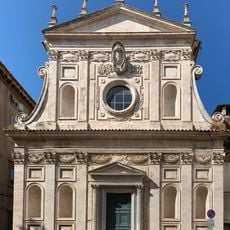
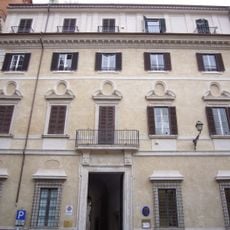
Santo Stanislao dei Polacchi, Polish national church in Via delle Botteghe Oscure, Rome, Italy.
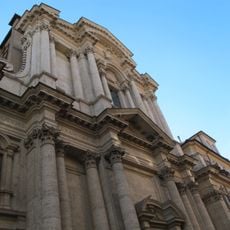
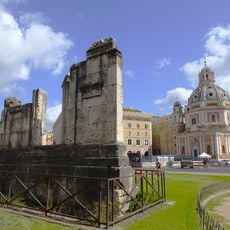
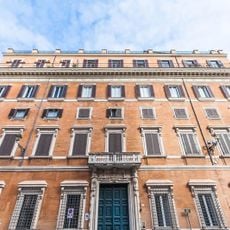
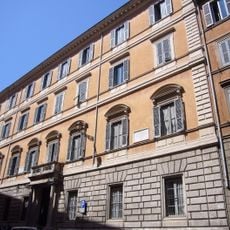
Santo Stanislao dei Polacchi stands on Via delle Botteghe Oscure in the Sant'Angelo rione, on the site of the medieval church San Salvatore in pensilis de Sorraca, itself built over the remains of the Circus Flaminius. Its façade on the street is by Francesco Ferrari and dates to 1735; the interior is a single nave covered by Ermenegildo Costantini's ceiling painting The Glory of Saint Stanislaus. The high altarpiece by Antiveduto Gramatica shows Jesus with Saints Stanislaus and Hyacinth, and the church also holds works by Taddeo Kuntze and other 18th-century Polish artists.
The church occupies the site of the medieval San Salvatore in pensilis de Sorraca, recorded between 1174 and 1209 and rebuilt by 28 October 1285 under Bishop Jerome of Palestrina. Pope Gregory XIII granted it to Cardinal Stanislaus Hosius, who took possession on 6 December 1578 and rebuilt it almost from the foundations with funds from Anna Jagiellonka, Stefan Batory and magnate families. It was consecrated in 1591 by Cardinal Jerzy Radziwiłł. After the partitions, Napoleon housed troops in the hospice and Russia turned the church into an Orthodox chapel; Poland recovered it in 1920 through Bishop Adam Stefan Sapieha.
The church keeps 18th-century works by Polish artists, among them paintings by Taddeo Kuntze. Since the 1950s priests of the Society of Christ have served here, and the church with its hospice remains the centre of Polish pastoral care in Rome. Popes have prayed here for Polish military victories, including Alexander VII in 1657 and 1661 and Innocent XI in 1683.
The church stands on Via delle Botteghe Oscure in the Sant'Angelo rione, a short walk from Largo di Torre Argentina. It is an active parish and chaplaincy for Poles in Rome, so visits are best timed outside Mass and other services. Dress as for any place of worship.
The high altar painting was created by Antiveduto Gramatica around 1600 and shows Jesus with Saints Stanislaus and Hyacinth in a traditional arrangement. This work stands out because it directly connects the Catholic Church with Polish religious identity during a time of religious change across Europe.
The community of curious travelers
AroundUs brings together thousands of curated places, local tips, and hidden gems, enriched daily by 92,722 contributors worldwide.