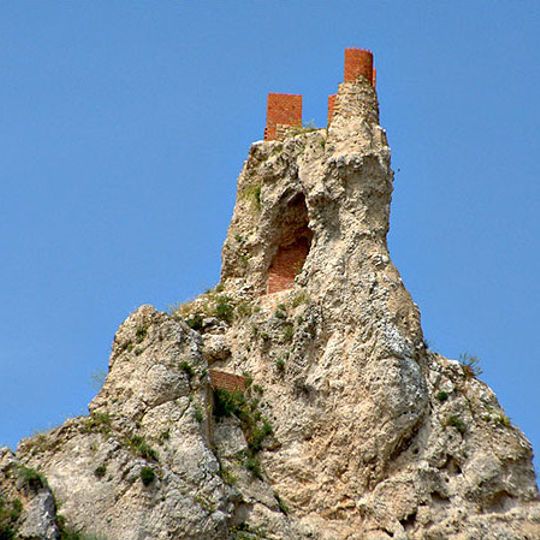
Castle of Pietrarossa, Medieval castle ruins in Caltanissetta, Italy.
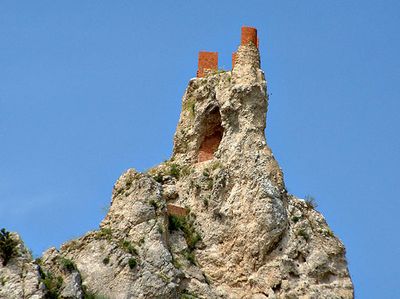
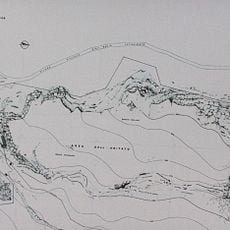
The Castle of Pietrarossa stands on a rocky spur above a ravine near the church of Santa Maria degli Angeli and the monumental cemetery, in the old Arab quarter of Caltanissetta, overlooking the valley down to the Salso river. After the collapse of 27 February 1567 only earthworks, two large towers and a thin watch turret remained; the turret fell in the early 20th century.
The castle's pre-Norman history is undocumented; the earliest certain records begin after Roger I of Altavilla settled in Sicily. The most accepted theory holds that the Byzantines built it between 750 and 800, though Saracen, Roman, Gothic and Greek origins have also been proposed. Under the Aragonese it hosted the three general Parliaments of Sicily in 1295, 1361 and 1378.
The name Pietrarossa is debated: it may refer to the bricks that once clad its towers, of which only traces remain. Under Aragonese rule the castle hosted the three general Parliaments of Sicily in 1295, 1361 and 1378. In 1600 the corpse of Adelasia, niece of Roger I of Altavilla, was found here wearing a copper crown bearing her name and lineage.
The castle stands beside the church of Santa Maria degli Angeli and the monumental cemetery, near the old Arab quarter, on the cliff above the Salso valley. Access is on foot from the historic centre; the site has no facilities or shelter, and the rock beneath the walls is unstable, as the collapse of 1567 showed.
In 1600, during the dismantling of the castle, the body of Adelasia, niece of Roger I of Altavilla, was found wearing a copper crown inscribed with her name and lineage. The castle had by then become a stone quarry after maintenance works begun in 1591.
The community of curious travelers
AroundUs brings together thousands of curated places, local tips, and hidden gems, enriched daily by 93,867 contributors worldwide.