Piombino Castle, Castle and city museum in Piombino, Italy
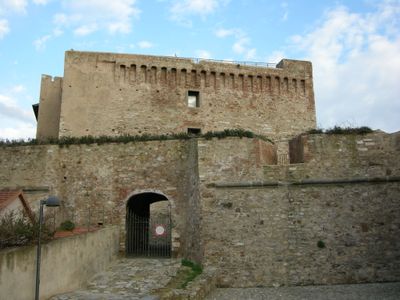
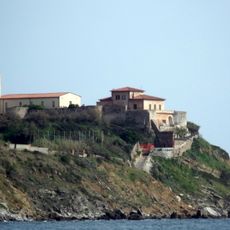
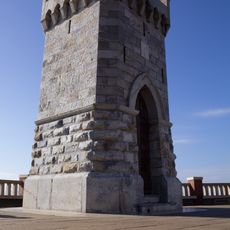
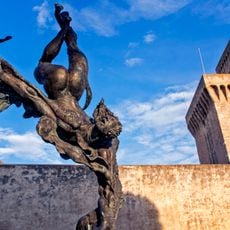
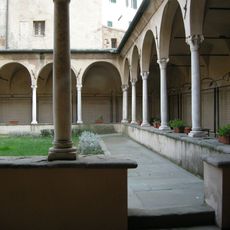
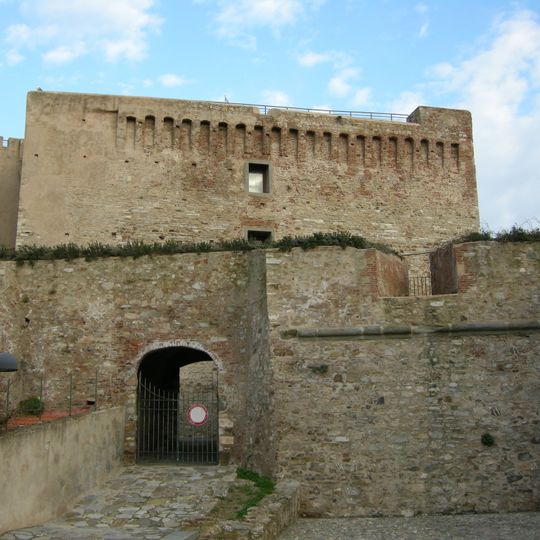
Piombino Castle is a medieval fortress positioned on a headland above the Tyrrhenian Sea, now arranged as a museum with multiple exhibition levels. The building displays archaeological finds, weapons, armor, and historical objects collected from the surrounding area and beyond.
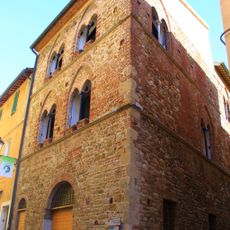
The Pisans built the castle in the 13th century as the Cassero Pisano, a nearly cubic mass closing the town's south-eastern edge. Leonardo da Vinci revised it while reorganising Piombino's defences. Between 1552 and 1557 Cosimo I de' Medici had Giovanni Battista Belluzzi add star-shaped bastions against firearms, and it became the Fortezza Medicea. Piero Ostilio Rossi directed restoration and excavations in 1999–2001.
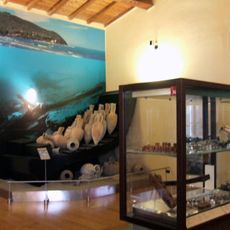
The museum is named after the castle and the city of Piombino and traces the building's history within the town's own events. On the ground floor are 13th-century objects found during the 1999–2001 excavations: plates, buckles, jugs, oil lamps, coins, armour plates, arrowheads and lead bullets. The second floor covers Piombino during the Resistance and the 20th century.
The castle stands on the height at the south-eastern edge of Piombino, where it once closed the town on that side. The museum occupies the restored building: 13th-century finds such as plates, buckles, jugs, lamps, coins, armour plates, arrowheads and lead bullets are displayed on the ground floor, while the second floor covers Piombino in the Resistance and the 20th century.
The museum's ground floor displays 13th-century objects found during the 1999–2001 excavations: plates, buckles, jugs, oil lamps, coins, armour plates, arrowheads and lead bullets. The second floor covers Piombino's history during the Resistance and the 20th century.
The community of curious travelers
AroundUs brings together thousands of curated places, local tips, and hidden gems, enriched daily by 93,993 contributors worldwide.