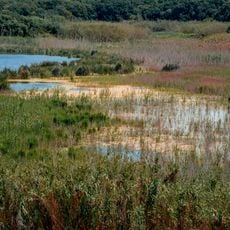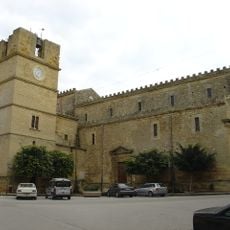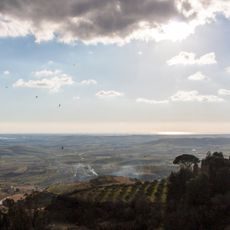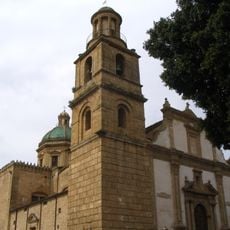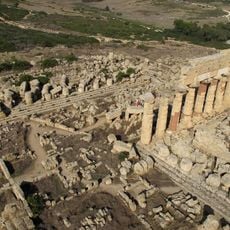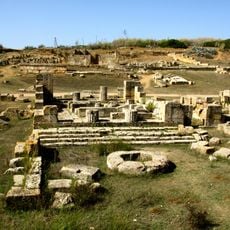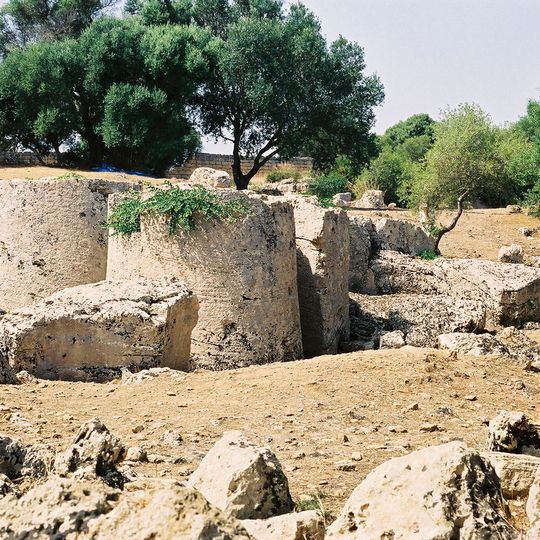
Cave di Cusa, Ancient limestone quarry near Campobello di Mazara, Italy.
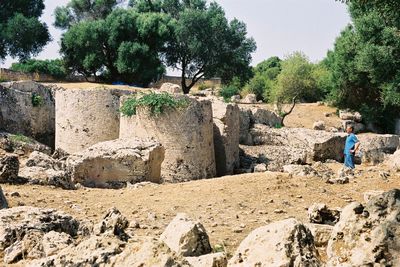
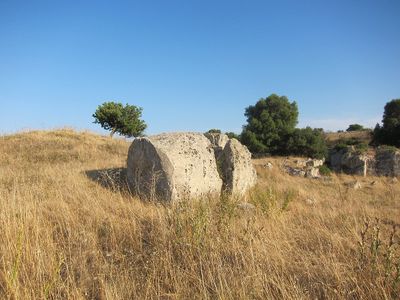
Cave di Cusa is an ancient limestone quarry near Campobello di Mazara, in western Sicily, where dozens of partially extracted blocks and column drums remain in place exactly as they were left. The site runs along a rocky ridge, showing clearly how workers cut and separated stone layers from the bedrock below.
The quarry was used by the ancient Greek city of Selinunte to supply stone for its large temples and was active for several centuries. In 409 BC, a Carthaginian invasion of the region forced workers to flee, leaving everything behind in an instant.
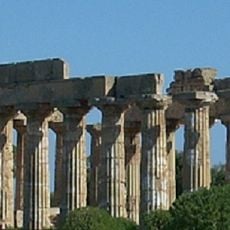
The stone cut here was destined for the temples of Selinunte, a Greek city a short distance away. Seeing the blocks still in place gives a rare sense of how ancient building projects actually worked from start to finish.
The site is not served by public transport, so private transport is needed to get there. The ground is uneven and rocky in places, so sturdy footwear makes the visit much easier.
The site holds about 60 blocks and column drums in various stages of carving, some still attached to the bedrock. Near the western edge, the Cava del Capitello preserves a capital roughed out but never finished. Grooves and holes cut into the stone let ropes and beams be threaded through to lift it.
The community of curious travelers
AroundUs brings together thousands of curated places, local tips, and hidden gems, enriched daily by 92,731 contributors worldwide.