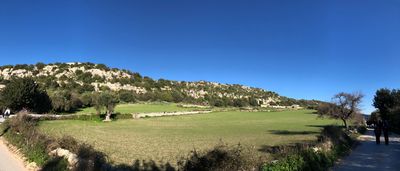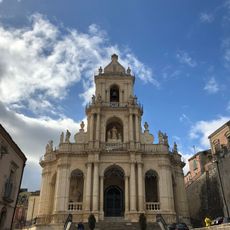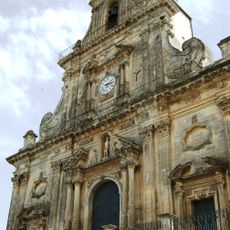
Castelluccio di Noto excavations, Bronze Age archaeological site and necropolis in Noto, Sicily, Italy
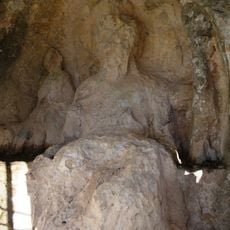
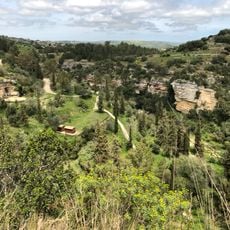
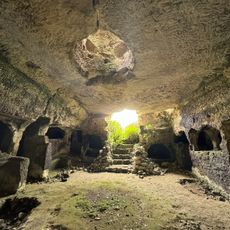
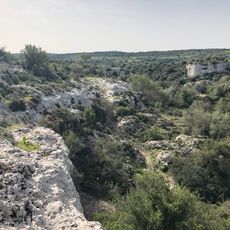
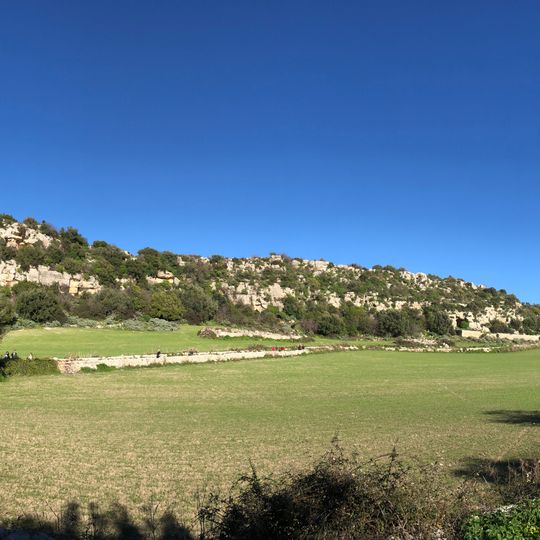
Castelluccio di Noto excavations form a Bronze Age necropolis with burial chambers carved into rock formations near Noto in Sicily. The chambers feature carved entrances decorated with spiral patterns and contain ceramic vessels and bone tools from the ancient inhabitants.
Excavations began in the early 1900s and revealed a settlement dating to 2200 BC, establishing the foundations of the Castelluccio culture. This discovery marked one of Sicily's earliest Bronze Age societies.
The burial chambers hold decorated ceramic vessels with brown lines on ochre-colored backgrounds alongside carved bone tools. These objects show connections to similar finds from Malta, pointing to trading relationships across the Mediterranean.
Visits work best with a guide since the chambers are scattered among rock formations and the paths are not always clear. Wear sturdy shoes and bring water, as the ground is rough and offers little shade.
Archaeologists found a meter-high ceramic jar containing olive oil residues, the earliest evidence of olive oil production in Europe. This discovery shows that people nearly 4300 years ago already practiced advanced storage and cultivation techniques.
The community of curious travelers
AroundUs brings together thousands of curated places, local tips, and hidden gems, enriched daily by 92,111 contributors worldwide.