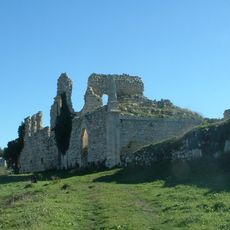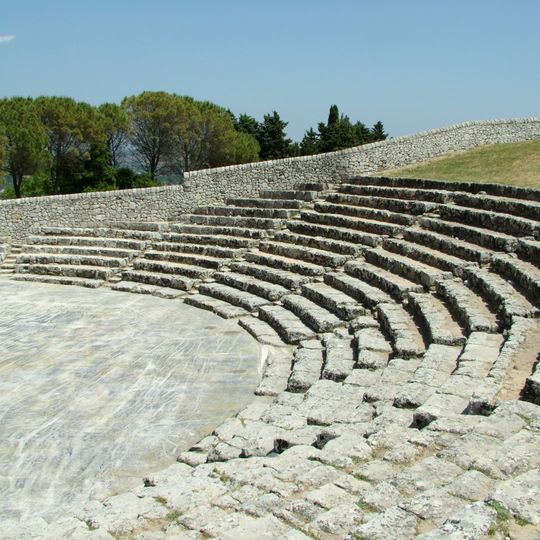
Greek theatre of Akrai, Ancient Greek theatre in Palazzolo Acreide, Italy
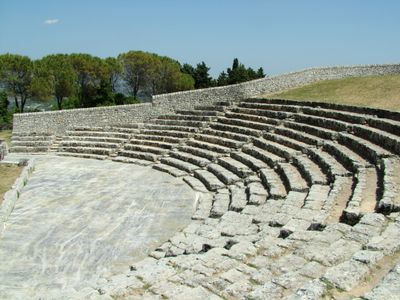
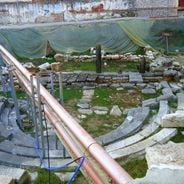
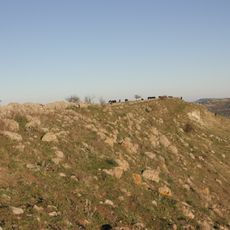
The Greek theatre of Akrai is an ancient performance venue with eight sets of stairs and approximately twelve rows of seating for about 700 spectators, built in a semicircular form facing north. The structure uses the natural slope and features an orchestra space that remains partially intact today.
The theatre was built in the 3rd century BCE under King Hieron II's rule in southern Italy. Archaeologist Baron Gabriele Judica began excavating the site in 1824, bringing the ancient structure to light.
The theatre served as a gathering place for religious ceremonies and civic meetings in the ancient city of Akrai. You can still observe its position near temples and government buildings, revealing how it functioned within the community.
The site is accessible by stairs and natural pathways, though the terrain on the ancient structure itself can be steep. Wear sturdy footwear and allow time to explore the seating areas, as the paths wind through the site.
This theatre's orchestra has a rare non-circular shape that differs from most classical designs. This unusual arrangement suggests early experimental ideas that were later adopted by Roman builders.
Location: Palazzolo Acreide
Website: https://www2.regione.sicilia.it/beniculturali/dirbenicult/database/page_musei/pagina_musei.asp?ID=56
GPS coordinates: 37.05762,14.89468
Latest update: December 6, 2025 17:42
Ancient Greek theaters demonstrate skilled architecture developed between the 5th and 3rd centuries BC. Built into hillsides, these structures utilized natural terrain to create stone seating and enhance acoustic performance. They served as venues for tragedies and comedies, as well as gathering spaces during religious festivals and panhellenic games. Most theaters are located in mainland Greece and on the islands, with notable examples such as Epidaurus in Argolis, renowned for its exceptional sound clarity, or the Theater of Dionysus in Athens, considered the cradle of Western theater where works by Aeschylus, Sophocles, and Euripides were performed. Additional sites are found across the eastern Mediterranean, including Miletus in present-day Turkey and Philippi in northern Greece. Some of these structures were modified during the Roman period, such as the Odeon of Herodes Atticus, which incorporated Roman architectural features while maintaining its function as a performance space. Many of these venues, which could seat between 5,000 and 18,000 spectators, remain important remnants of ancient Greek social and cultural life.
Santoni
562 m
Chiesa di San Paolo
1.1 km
San Sebastiano
942 m
Museo archeologico di Palazzo Cappellani
1.1 km
Chiesa di San Sebastiano
7.8 km
Monte Casale
7.9 km
Chiesa di Sant'Antonio
7.9 km
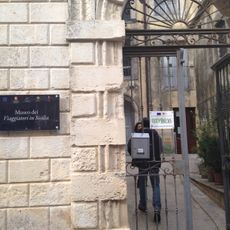
Museo dei viaggiatori in Sicilia
1.1 km
San Giovanni Battista, Avola
6.4 km
Sant'Antonino
3.2 km
Sant'Antonio Abate
7.3 km
Natività di Maria
3.2 km
Grotta di Senabardo
512 m
Chiesa dell'Annunziata
1.3 km
Palazzo della Pretura
1.1 km
City hall of Palazzolo Acreide
938 m
Cedar
1.3 km
Staircase
926 m
Public garden
1.2 km
Busto del Barone Vincenzo Messina di Bibbia
1.2 km
Central Square
970 m
Palazzolo Acreide railway station
1.3 km
Cipresso comune
1.3 km
Noce comune
5.7 km
Alberi monumentali
1.4 km
Sundial
2 km
Castello Requisenz
2.9 km
Piazza della Pretura
1.1 kmReviews
Visited this place? Tap the stars to rate it and share your experience / photos with the community! Try now! You can cancel it anytime.
Discover hidden gems everywhere you go!
From secret cafés to breathtaking viewpoints, skip the crowded tourist spots and find places that match your style. Our app makes it easy with voice search, smart filtering, route optimization, and insider tips from travelers worldwide. Download now for the complete mobile experience.
A unique approach to discovering new places❞
— Le Figaro
All the places worth exploring❞
— France Info
A tailor-made excursion in just a few clicks❞
— 20 Minutes