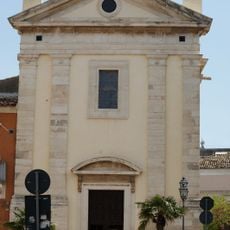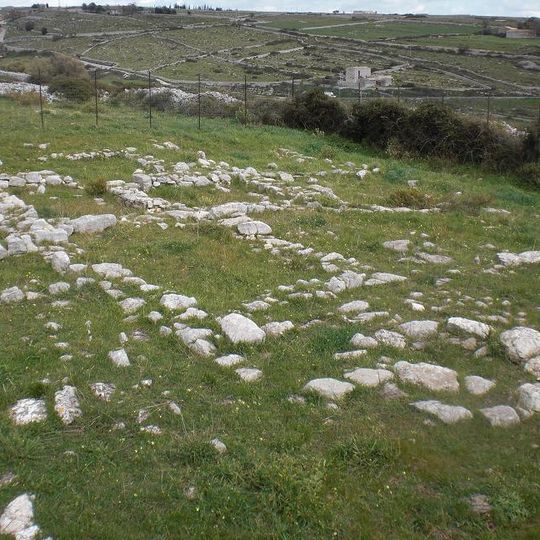
Castiglione, Archaeological site in Ragusa, Italy.
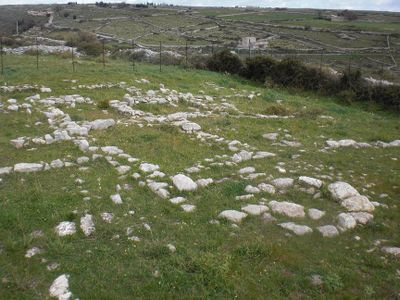
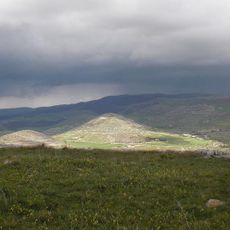
Castiglione is an archaeological site on a long, narrow hill 3 km from Ragusa, overlooking the plain of Vittoria. It preserves two large districts from the 7th century BC, wall fortifications, the foundations of a sanctuary, an urban road and a Greek necropolis. The site was occupied from the 7th to the 4th century BC.
Castiglione was founded in the 7th century BC by Siculi, who built two large districts in the 6th century BC with wall fortifications, a sanctuary and a necropolis. From the 5th century BC the site came under Greek influence, and it was abandoned from the 4th century BC.
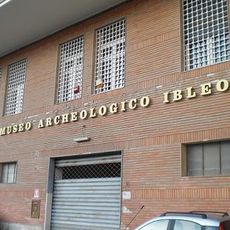
The Guerriero di Castiglione is a bas-relief on a single slab of local limestone, not a statue. It shows an armed horseman facing left, with a bull and a sphinx carved at the ends of the block, and bears an inscription in Greek characters and Doric dialect, probably naming a local figure. It is kept in the Museo Archeologico Ibleo in Ragusa.
Access to the excavations is arranged through guided tours organized by the regional museum in Ragusa Superiore, which houses most of the findings. Wear comfortable shoes and be prepared for uneven ground and elevation changes across the site.
The site occupies a long, narrow ridge above the plain of Vittoria, about 3 km from Ragusa. The Guerriero di Castiglione, a single limestone slab with a horseman, a bull protome and a sphinx, carries a Doric Greek inscription naming a probably indigenous figure; it is kept in Ragusa's Museo Archeologico Ibleo.
The community of curious travelers
AroundUs brings together thousands of curated places, local tips, and hidden gems, enriched daily by 94,402 contributors worldwide.