Castle of Ragusa, Medieval fortress in Ragusa Ibla, Italy
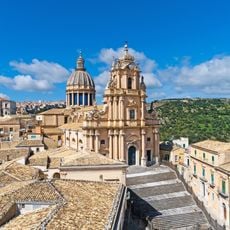
The Castle of Ragusa is a medieval fortress on elevated ground in Ragusa Ibla with stone walls from various periods. Its structure shows how multiple building phases were layered together and take advantage of the sloping terrain.
The first walls were raised in the Byzantine era on the summit of today's Ragusa Ibla. The castle withstood an Arab siege in 844 and was taken by Muhammad ibn Khafaja's troops in 848. The Normans further fortified it, and between the 11th and 12th centuries it served as the administrative and legal centre of the County of Ragusa. In 1194 Henry VI of Swabia captured it. Partially destroyed by the 1693 Val di Noto earthquake, its ruins were demolished in the early 1900s to build the Ragusa Military District Command.
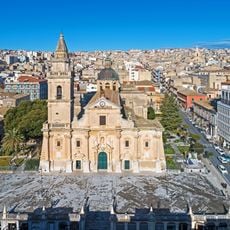
The castle's name survives in Ragusa Ibla's street names, which recall its lost structures. Of the defensive walls only Porta Walter, built in 1643, and short stretches embedded in the urban fabric remain. Portions of the earliest Byzantine walls are marked with tourist signage near the church of Santissimo Signore Trovato, on the eastern edge of the district.
The castle is best reached on foot through the narrow streets of Ragusa Ibla or by local bus from the modern part of the city. The terrain is steep, so wear sturdy shoes and allow time for the climb.
The castle no longer stands: its ruins were demolished in the early 1900s to make way for the Comando Distretto Militare di Ragusa. Of the city's defensive walls only Porta Walter, built in 1643, and short stretches embedded in the urban fabric remain; portions of the earliest Byzantine walls are marked with tourist signage near the church of Santissimo Signore Trovato.
The community of curious travelers
AroundUs brings together thousands of curated places, local tips, and hidden gems, enriched daily by 93,574 contributors worldwide.