Sant'Anna in Giolica, Medieval Catholic church in Prato, Italy
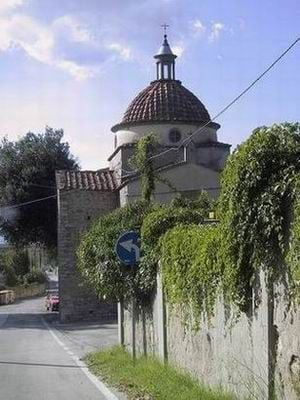
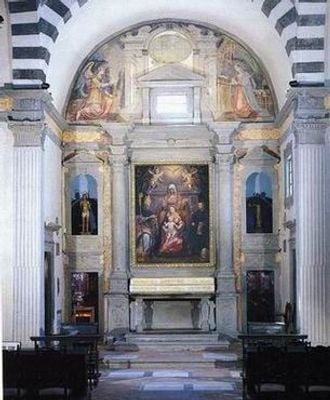
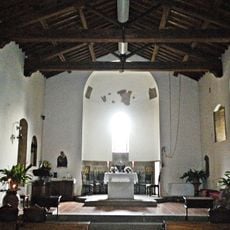
Sant'Anna in Giolica is a church on Via di Sant'Anna in Prato, built of irregular alberese stone with a plastered upper section added in 1730-40. A small dome pierced by four round windows and topped by a lantern rises where the transepts meet. The 1502-4 Latin-cross interior has white plastered walls, barrel vaults with terracotta roundels on the pendentives, and a raised cotto floor.
The hermit convent was founded in 1269 by the Prato citizen Brunetto de' Rossi and consecrated in 1273. Nearly abandoned after the 1348 plague, it passed to the Augustinians, who rebuilt it between the late 15th and early 16th century. The convent served as a lazaretto during the plagues of 1527–30 and 1630–31, and the church was enlarged in 1502–04 with a transept perhaps designed by Giuliano da Maiano.
Inside, you can see 14th-century frescoes showing the Virgin Mary and Saint Catherine on the walls, along with altarpieces by local artists. These images create the visual and spiritual character of the space and show how art and worship intertwined in this place over the centuries.
The church is located at Via Gabriele D'Annunzio 1 in Prato and has very limited visiting hours. You should ask locally about when you can visit since access is restricted and depends on special openings throughout the year.
From 1820 to 1824, the former convent section served as an experimental workshop for modern cotton and wool spinning machines. This industrial period shows how the building changed roles and adapted to new uses while remaining part of the local community.
The community of curious travelers
AroundUs brings together thousands of curated places, local tips, and hidden gems, enriched daily by 93,936 contributors worldwide.