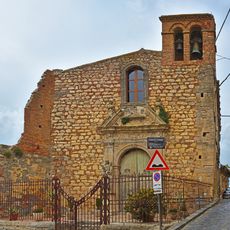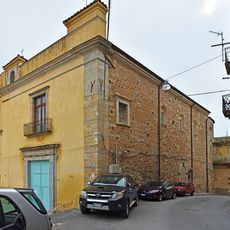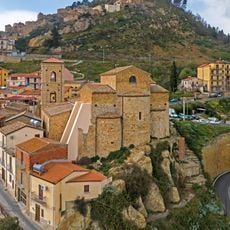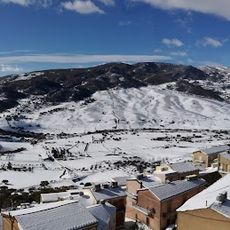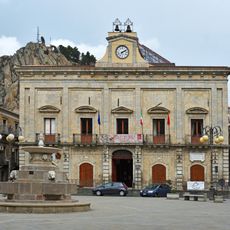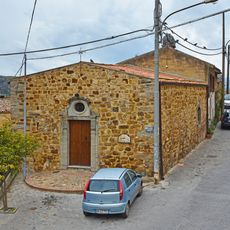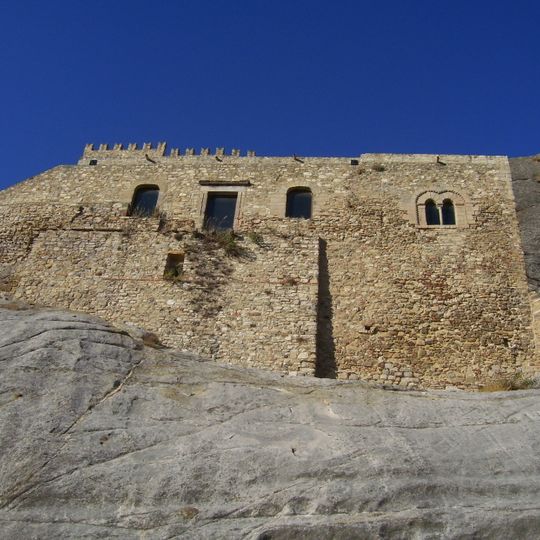
Castle of Sperlinga, Medieval castle in Sperlinga, Italy.
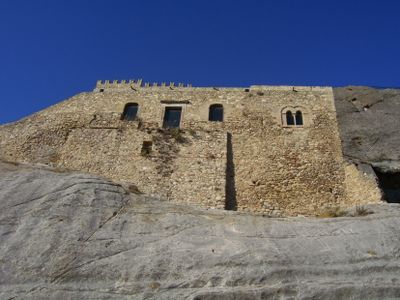
Castle of Sperlinga is a fortress carved out of a natural rock outcrop in the town of Sperlinga, in the interior of Sicily, with rooms and passages cut across several levels of the stone. The layout covers stables, a forge, prison cells, and a hall with mullioned windows that open onto an open rocky courtyard.
The fortress was built in the Middle Ages and became widely known in 1282, during the Sicilian Vespers uprising, when it was the only stronghold on the island to hold out in support of French rule for a full year. That episode left a deep mark on local memory and gave the place its place in Sicilian history.
The name derives from the Greek 'Spelaìon', Latinised as 'Spelunca', meaning cave, referring to the rock cavities used as tombs by the Siculi. A local Gallo-Italic dialect survives from the Lombard community settled here in the 12th century. Inside, look for the 12-niche silo that served as a sundial and shafts cut to track the sun at the winter and summer solstices.
The site sits on a hillside and is best explored on foot, as visitors move through rock passages and across several levels. Comfortable shoes are a good idea, and it helps to leave enough time to reach the lower cave areas.
The castle contains rock-cut features designed for astronomical use, including openings that manage the penetration of sunlight at the winter and summer solstices, and a silo with 12 niches that served as a sundial. In 1932 the artist Maurits Cornelis Escher visited Sperlinga and made a drawing of the castle grotto.
The community of curious travelers
AroundUs brings together thousands of curated places, local tips, and hidden gems, enriched daily by 94,076 contributors worldwide.