Basilica of Santa Maria Maggiore, Minor basilica in Nicosia, Sicily, Italy
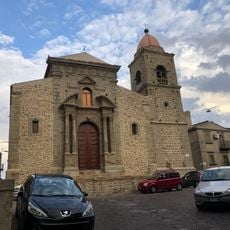
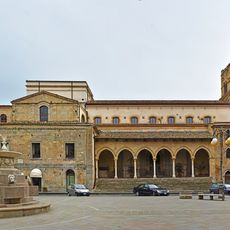
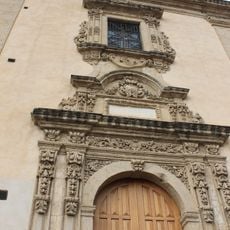
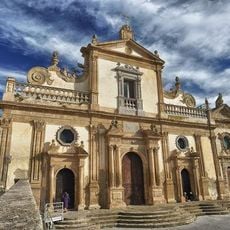
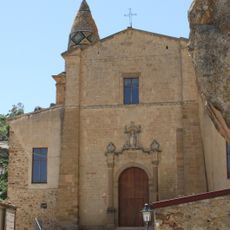
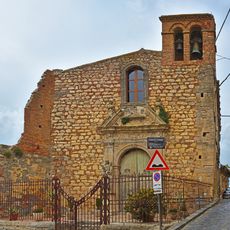
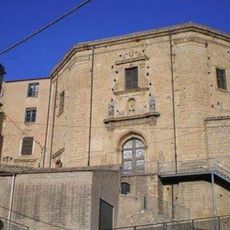
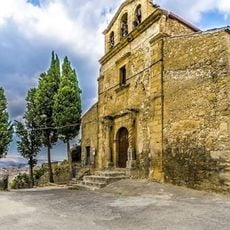
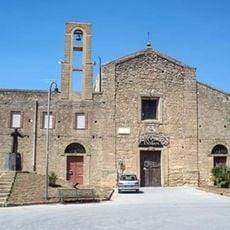
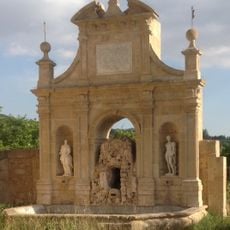
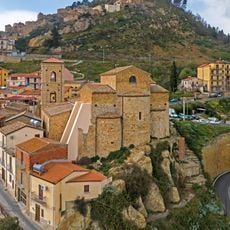
The Basilica of Santa Maria Maggiore stands on Largo Santa Maria Maggiore in Nicosia, Sicily, reached by a stone staircase. Its unfinished Baroque facade has two orders and three portals; the central late-Baroque portal, donated by the Baron of Sant'Agrippina, carries statues of Bacchus, Venus with Cupid, Ceres and Aeolus. Inside, three naves on cruciform piers lead to a transept with an octagonal-drum dome, stuccoes by Carmelo Guglielmino and a frescoed apse.
The church underwent major reconstruction after landslides in the late 1700s, commissioned by King Ferdinand III and executed by architect Giuseppe Serafino. This rebuilding fundamentally transformed the structure and reflects the building techniques of that era.
The church keeps the wooden throne said to have been used by Emperor Charles V on his visit, now decorated with the Habsburg double-headed eagle. In the right nave, a 17th-century crucifix by Vincenzo Calamaro was carried in processions during plague epidemics. The marble Cona by Antonello Gagini, in the church since 1512, shows scenes from the life of the Virgin.
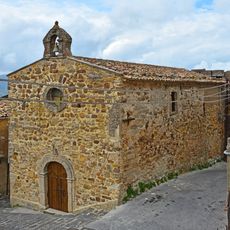
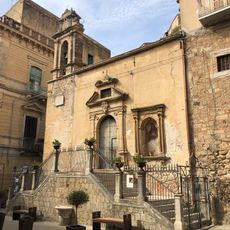
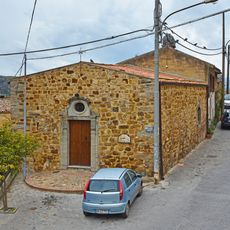
The church stands on Largo Santa Maria Maggiore, reached by a stone staircase up to the unfinished Baroque facade; the small chapel of San Sebastiano sits at street level in front of it. The main portal is flanked by two lesser doors, the left one for the Congregation of the Monte di Pietà and the right one opened only in Jubilee years. The second storey of the facade was never built.
In 1147, the Archbishop of Messina transferred ownership of the church to the Knights of the Order of Saint John of Jerusalem. This event connected the building to the Crusades and the activities of military religious orders in Sicily.
The community of curious travelers
AroundUs brings together thousands of curated places, local tips, and hidden gems, enriched daily by 94,440 contributors worldwide.