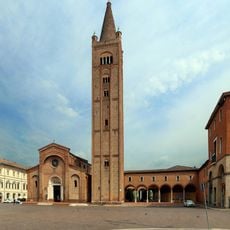
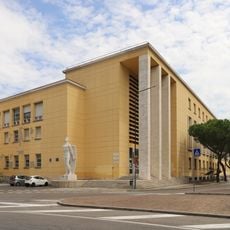
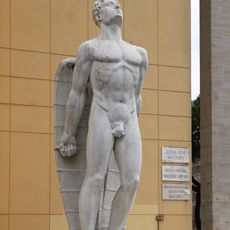
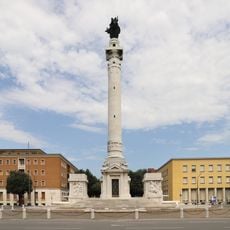
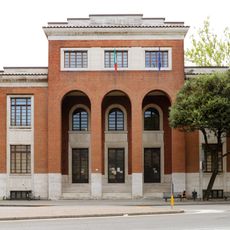
Monumental cemetery of Forlì, Heritage cemetery in Forlì, Italy.
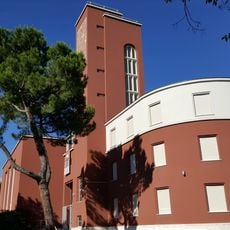
The monumental cemetery of Forlì lies along Via Ravegnana near Villa Pianta, on the road to Ravenna. Its layout follows the design begun by architect Pietro Camporese the Younger in 1867, with perimeter arcades whose arches were turned into private chapels for wealthier families, while the poor were buried in the central field. The Pantheon was structurally isolated in 1933, and the brickwork of the rebuilt arcade pavilions shows a darker red than the earlier Forlì brick.
The cemetery was established after Napoleon's 1806 Saint-Cloud decree required burials outside city walls. Forlì chose a site at Villa Pianta along the Ravenna road in 1807, and construction began on 1 July 1811 under a Kingdom of Italy decree. Ruffillo Righini expanded it in 1818; from 1867 Pietro Camporese the Younger led a nearly 20-year rebuild, continued by Guerrini after 1873.
The cemetery holds the tombs of Forlì's noble families, including the Albicini, Guarini, Matteucci and Orsi Mangelli, alongside figures such as the architect Piero Maria Lugli. Wealthier citizens paid for the perimeter enclosure in exchange for burial under the portico arches, turned into private chapels, while poorer residents were interred in the central field.
Access the cemetery through the main entrance on Via Ravegnana, where parking areas are available and buses run regularly from Forlì center. Wear comfortable shoes and allow time to walk through the different sections at a leisurely pace.
The 1933 enlargement isolated the Pantheon and left a visible colour break: the older brickwork is the typical red of Forlì, while the end pavilions of the arcades, rebuilt after the isolation, are dark red. In 1974 the Roman architect Piero Maria Lugli designed the ossuary and the monument to the Martyrs of the Resistance.
The community of curious travelers
AroundUs brings together thousands of curated places, local tips, and hidden gems, enriched daily by 93,804 contributors worldwide.