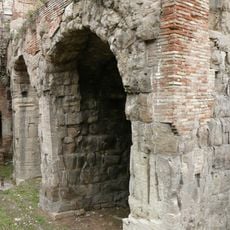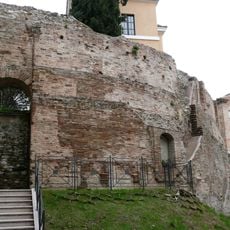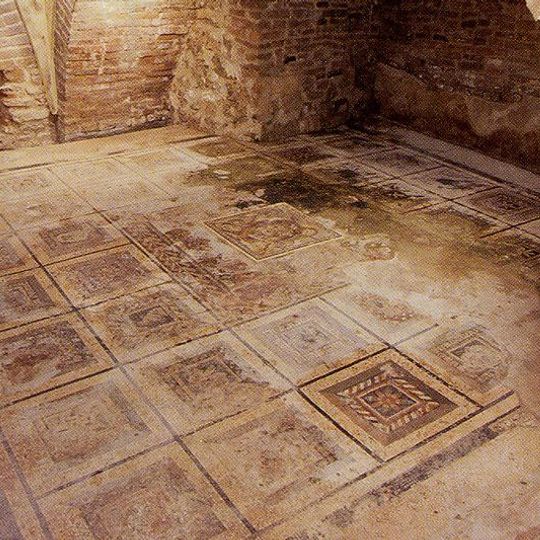
Domus e mosaico del Leone, Roman residential ruins in Teramo, Italy
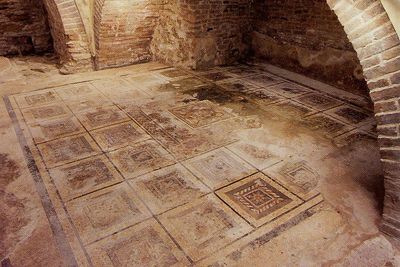
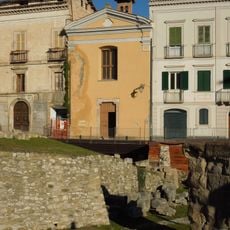
The Domus e mosaico del Leone is a Roman residential structure in Teramo featuring a tetrastyle atrium with four columns directing rainwater into a central collection basin. The preserved mosaics display complex geometric patterns with colored perspective boxes, rosettes, and laurel wreaths.
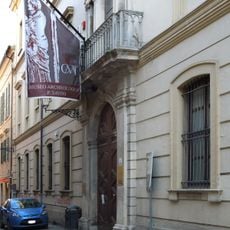
The site was discovered in 1891 during renovation work at Palazzo Savini and contains residential structures dating to the 1st century BCE. The discovery revealed insights into the daily life of wealthy Romans during the late Republic and early Imperial period.
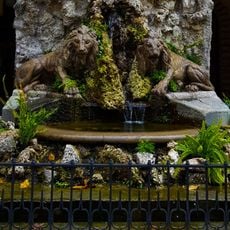
The mosaic depicts a lion attacking a snake, surrounded by theatrical masks and decorative elements such as fruits, flowers, and birds. These scenes reflect the tastes of wealthy residents who surrounded themselves with such artistic representations.
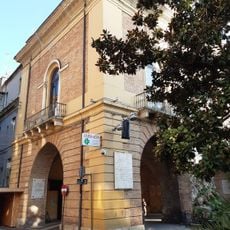
Access to the remains is through an underground passage beneath Palazzo Savini, where the ruins are preserved in place. Comfortable shoes are recommended since the ground can be uneven and spaces are confined.
The mosaics employ a rare use of perspective effects, with colored boxes creating an impression of spatial depth. This technical sophistication was uncommon in Roman times and demonstrates the wealth and artistic aspirations of the homeowners.
The community of curious travelers
AroundUs brings together thousands of curated places, local tips, and hidden gems, enriched daily by 60,000 contributors worldwide.