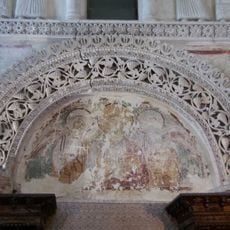
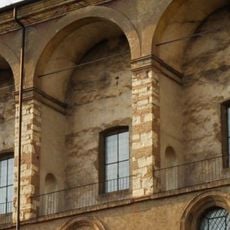
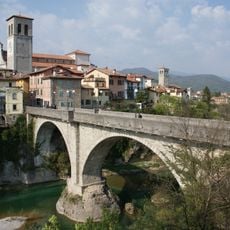
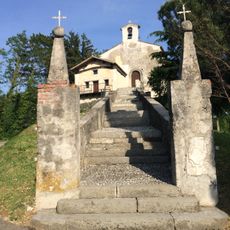
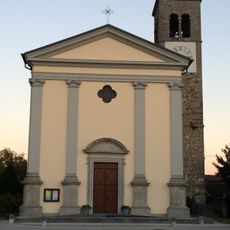
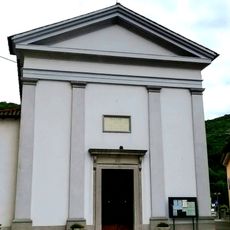
Dôme de Cividale del Friuli, Renaissance minor basilica in Cividale del Friuli, Italy.
The Duomo di Cividale del Friuli is a hall church with three naves, each ending in an apse, built in a mixed Gothic-Venetian and Renaissance style. The wider central nave has a barrel vault, the side naves cross vaults, and the campanile stands on the right side. Above the main portal hangs the lacquered-wood equestrian monument of Marcantonio di Manzano, carved by Girolamo Paleario after 1621.
The first church on the site was built in the 8th century under Patriarch Callisto, who moved the bishopric from Grado to Cividale. Damaged by earthquakes in 1348 and 1364, it was entrusted in the mid-15th century to Bartolomeo delle Cisterne, who died in 1480 leaving it unfinished. On 29 January 1502 a pier of the right nave collapsed; Pietro Lombardo rebuilt it in a Gothic-Renaissance mix, and it was consecrated on 9 May 1529.
Every January, the cathedral hosts the Messa del Spadone, a Mass during which a large sword is raised at a key moment of the liturgy. The ritual draws locals and visitors together and turns the church into a living space of local tradition.
The cathedral is open daily and can be visited on its own, though setting aside extra time to see the attached museum is worthwhile. The museum is housed in the same complex and accessible directly from the nave.
The Christian Museum next to the cathedral keeps the Lombard throne, the baptismal font of Callixtus and the Altar of Duke Ratchis, along with frescoes of Lombard life made in sgraffito. The throne is not attributed to Patriarch Callisto in the sources.
The community of curious travelers
AroundUs brings together thousands of curated places, local tips, and hidden gems, enriched daily by 93,013 contributors worldwide.