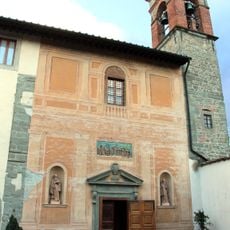
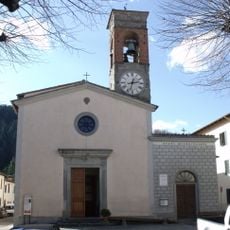
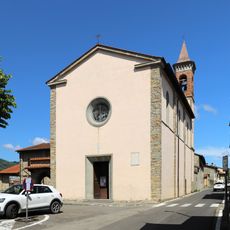
Hermitage of Camaldoli, Benedictine hermitage in Poppi, Italy.
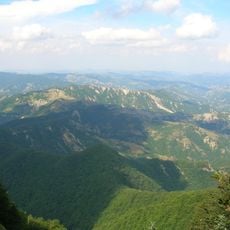
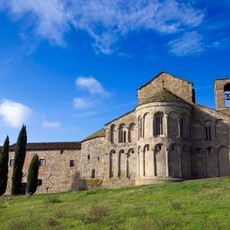
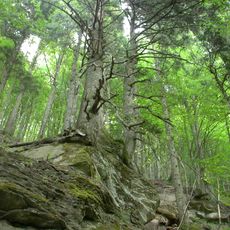
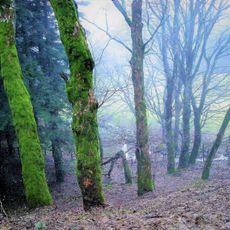
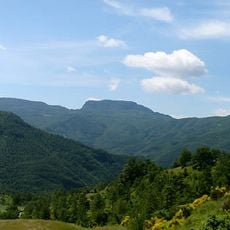
The Hermitage of Camaldoli is a Benedictine monastery located on a ridge within the Casentino forests and surrounded by ancient beech woodlands. The ensemble comprises multiple buildings including a church, monks' cells, guest quarters, and the historic pharmacy, all built in stone and connected by narrow pathways.
Saint Romuald founded the hermitage in 1023 in a forest clearing where five monks' cells and a chapel for communal prayer were initially built. Over centuries, the site grew into an important center of monastic life and continues to serve that purpose today.
The name Camaldoli comes from Campus Maldoli, the clearing named after the land donor Maldolo. The community's two houses, the monastery and the hermitage, follow the same rule but differ in lifestyle: more communal life at the monastery, more solitude at the hermitage, where nine monks live. A walnut-furnished pharmacy of 1543 survives from the monastery's old pharmaceutical laboratory.
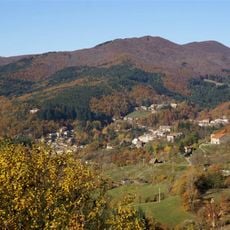
The hermitage stands at about 1,100 m in the Foreste Casentinesi national park, roughly 45 km from Arezzo and 80 km from Forlì, near the border with the province of Forlì-Cesena. A stone wall encloses the complex and a gate on the road opens onto the inner courtyard. From the courtyard visitors can enter the guesthouse, the church and the cell of Saint Romuald; a railing separates this area from the monks' inner cells.
The cell of Saint Romuald, the only one visitors may enter, is built as a corridor winding on three sides around the monk's bedroom, study and chapel. This layout shelters the monk from harsh winter temperatures and stands for the inner path of withdrawal; the monks' own cells follow the same plan.
The community of curious travelers
AroundUs brings together thousands of curated places, local tips, and hidden gems, enriched daily by 92,933 contributors worldwide.