Grotta delle Palombe, Natural cave in Nicolosi, Italy
Grotta delle Palombe is a cave system situated beneath the Monti Rossi, containing layered chambers at different elevations. Its interior is characterized by vertical shafts that create a intricate network of passages and spaces.
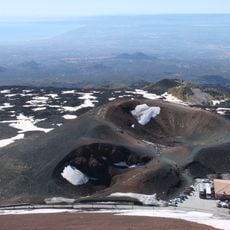
The cave formed during Mount Etna's eruption in 1669, which also created the Monti Rossi formation. A documented exploration followed in 1823 when Mario Gemmellaro and John Marshall reached its lower sections.
The name "Palombe" refers to the wild pigeons that gave the cave its popular name; the sources record no nesting tradition, so the name is best treated as a local label. The 1823 descent by Mario Gemmellaro and John Marshall left a plaque fixed inside the cave, still visible on the rock. The cavity is a reogenetic fracture cave formed in an eccentric cone of Etna during the 1669 eruption.
Accessing this cave requires specialized speleological equipment and technical climbing skills due to its vertical shafts. Visitors should understand that only trained and properly equipped groups can safely explore this formation.
The cave houses scientific instruments including seismographs that monitor Etna's ongoing volcanic activity. This transforms the space into an active research site where real-time data about volcanic processes is being collected.
The community of curious travelers
AroundUs brings together thousands of curated places, local tips, and hidden gems, enriched daily by 94,303 contributors worldwide.