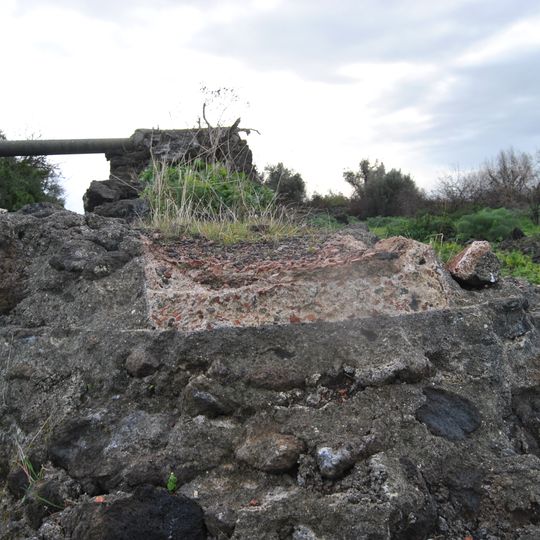
Ancient Roman aqueduct, Roman aqueduct in Province of Catania, Italy
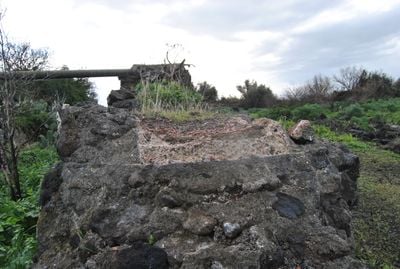
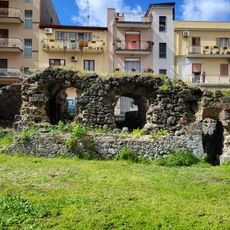
The ancient Roman aqueduct in the Province of Catania is a water transportation system built with stone arches spanning across the landscape. The structure demonstrates Roman engineering methods designed to move water over long distances and varying elevations.
The aqueduct was constructed during the Roman period to supply the growing city of Catania with fresh water. It fed public baths and residential areas, making urban expansion possible through reliable water delivery.
The name Acquedotto romano di Catania is modern; classical sources never mention the structure, and the first reference comes from Fazello in the second half of the 16th century, who called it as rich in water and monumental as those of Rome. Bolano then described it branching in three directions, one for each civic quarter. In 1782-1787 Jean Houel illustrated stretches of it and the barrel-vaulted cistern of Santa Maria di Licodia.
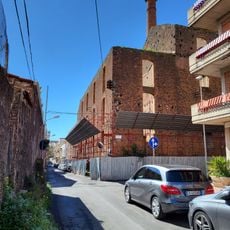
The archaeological site preserves several original sections that visitors can view to observe Roman construction techniques firsthand. Expect uneven terrain and partially exposed structures, which is typical for excavated historical sites.
A 1st-century stone plaque found near the aqueduct's starting section records the names of the curatores aquarum, the officials in charge of the water supply; it is now kept at Catania's Museo civico in Castello Ursino. The engineer Luciano Nicolosi estimated the flow at about 30,000 cubic metres of water per day.
The community of curious travelers
AroundUs brings together thousands of curated places, local tips, and hidden gems, enriched daily by 93,243 contributors worldwide.