Santissima Annunziata, Baroque monastery in Paternò, Italy
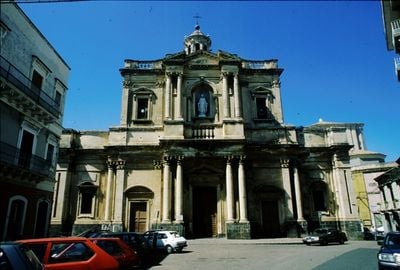
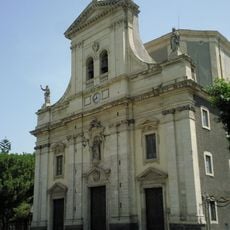
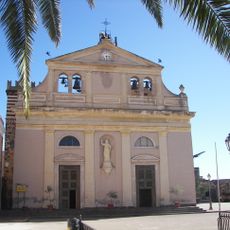
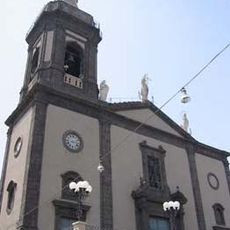
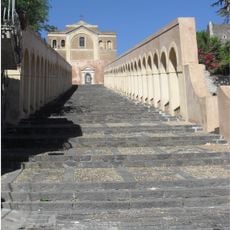
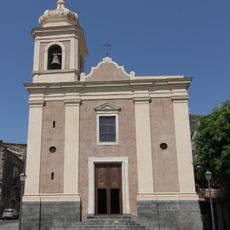
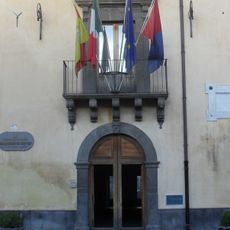
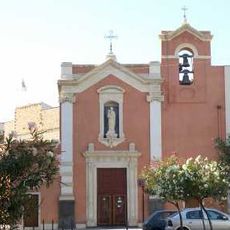
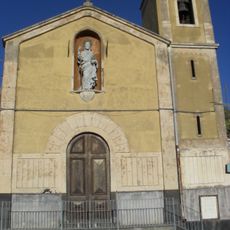
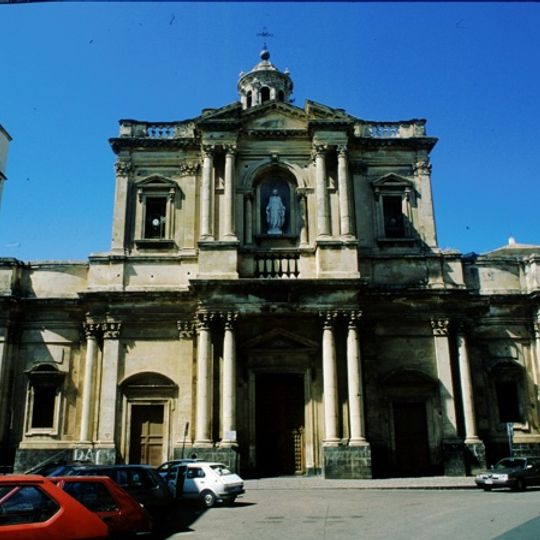
Santissima Annunziata is a church and former monastery in Paternò, about 36 by 80 metres, made of four building phases. The oldest western part, with a belvedere loggia in lava stone and limestone, dates to the later 17th century; the eastern block, designed by Stefano Ittar, combines dormitories and church. The baroque church has a large pseudo-dome and a facade with a Madonna statuette in a niche above the portal.
A Benedictine convent existed here from 1350, founded with houses given by Geltrude di Sanfilippo on the hill of Santa Maria dell'Alto. After a dormitory roof collapsed in 1644, the nuns moved to a new building funded by Giuseppe Cardonetto's 1592 bequest; a papal brief of 18 March 1662 united the Clarisse and Benedictine communities. The church was rebuilt from 1767 to designs by Stefano Ittar, and the facade was completed in 1908 by Cesare Impallomeni.
The church is Paternò's chiesa madre, a title it received on 3 February 1915 when the Catania Curia united it with Santa Maria dell'Alto under a single parish. The former Benedictine convent, suppressed in the 19th century, now houses the municipal library named after the Paternò geographer Giovanni Battista Nicolosi, inaugurated on 7 January 1951 on the ground floor of the southern wing.
The complex measures about 36 by 80 metres and grew in four building phases: the oldest western wing with its lava-stone and limestone belvedere loggia, the 18th-century eastern block by Stefano Ittar, 19th-century linking structures around a courtyard, and 20th-century changes. The municipal library named for geographer Giovanni Battista Nicolosi occupies the ground floor of the southern wing, reopened in 2008 after restoration.
The monastery's library and archive were partly dispersed after the convent was suppressed and the building passed to the Comune di Paternò. The church facade stayed unfinished for decades: work begun under Stefano Ittar's design was halted for economic reasons, and only in 1905 did engineer Cesare Impallomeni resume it, dropping the planned bell towers. It was completed in 1908.
The community of curious travelers
AroundUs brings together thousands of curated places, local tips, and hidden gems, enriched daily by 93,871 contributors worldwide.