Ipogeo celtico, Underground archaeological site in Cividale del Friuli, Italy.
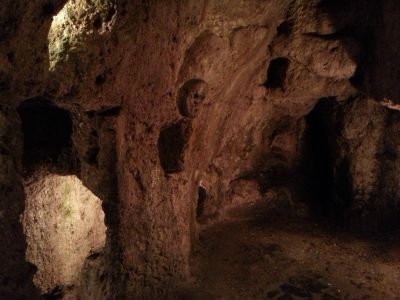
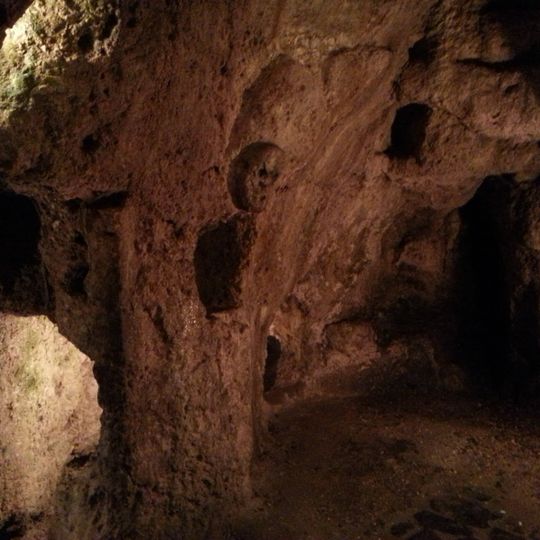
The Ipogeo Celtico is a multi-level underground complex in Cividale del Friuli, carved into rock with axes. Its walls contain small niches for ossuaries and three carved masks and three decorative pillars. Pick marks indicate a later Roman or Lombard phase.
The site originates from pre-Roman times and bears marks of Celtic occupation followed by later adjustments during the Roman and Lombard periods. These layers of use trace the long span of human presence and adaptation in the space.
Three bearded faces and three small decorative pillars were cut into the walls with an axe, alongside small niches that probably held ossuaries. The carving is Celtic in execution with Mediterranean artistic influences, dated to between 200 and 100 BC.
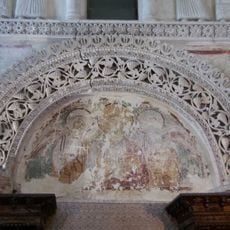
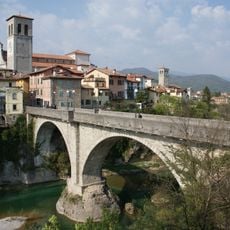
The hypogeum lies in the historic centre of Cividale del Friuli, near the Natisone river and the Devil's Bridge. The chambers descend over several levels and branch in different directions, so a torch helps where light is dim. The rock-cut rooms are cramped and the floor uneven; sturdy shoes are useful.
The walls hold small niches that were made to contain ossuaries, and three mascheroni and three small decorative pillars were cut with an axe. Tool marks show two phases: axe work datable to between 200 and 100 BC, and later pick-cut loculi from late Roman or Lombard times.
The community of curious travelers
AroundUs brings together thousands of curated places, local tips, and hidden gems, enriched daily by 92,816 contributors worldwide.