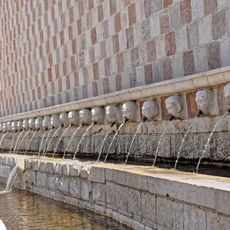
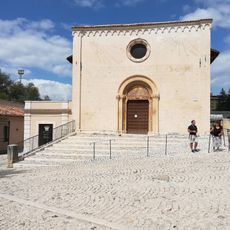
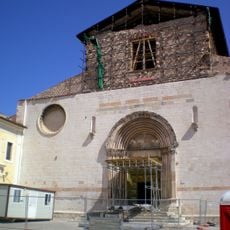
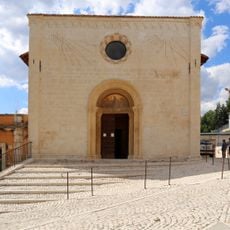
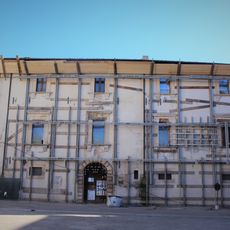
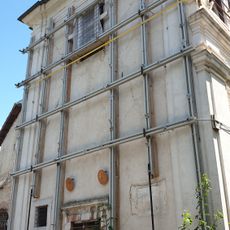
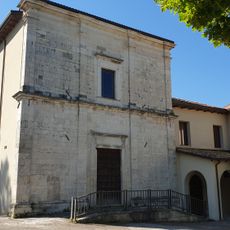
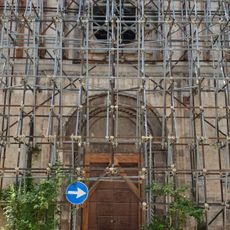
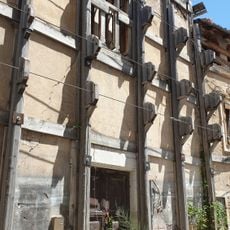
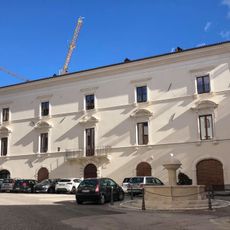
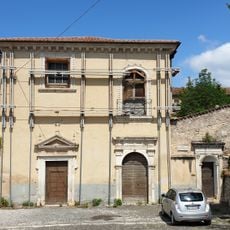
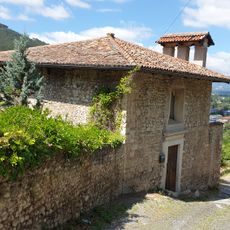
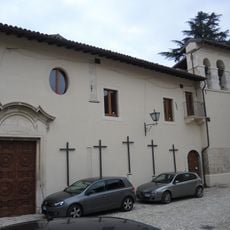
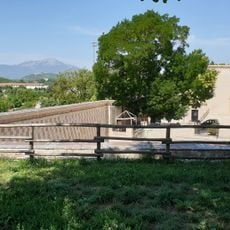
City walls of L'Aquila, Medieval fortification in L'Aquila, Italy.
The City Walls of L'Aquila are a medieval fortification stretching across the hilltop, forming a complete perimeter around the historic center with multiple entrance gates and observation points. Several original gates remain functional today, allowing visitors to reach different parts of the center through these preserved passages.
The first walls probably rose after L'Aquila's founding but failed to stop Manfredi's destruction of the city in 1259. After the Angevin rebuilding, a new circuit was begun in 1270 by Lucchesino da Firenze, who also divided the city into four historic quarters; work was essentially complete by 1316, when Leone di Cecco da Cascia was Capitano di Città, as the plaque on Porta Barete records.
The walls display medieval military architecture through their stone construction, watchtowers, and gates that controlled entry to a major trading hub. Visitors walking along them can still sense how these boundaries shaped daily life for merchants and residents in the medieval town.
Visitors can walk along preserved sections of the walls, though accessibility varies depending on maintenance conditions. Wear comfortable shoes since the paths are uneven and the hilltop terrain includes slopes and stairs.
Anton Ludovico Antinori's 17th-century Cronache aquilane records the walls as five canne high and six palms wide, with 86 towers and twelve gates later reduced to four. The four main gates stood at the ends of the two internal axes: Porta Barete to the west, Porta Paganica to the north, Porta Bazzano to the east and Porta Rivera to the south.
The community of curious travelers
AroundUs brings together thousands of curated places, local tips, and hidden gems, enriched daily by 92,791 contributors worldwide.