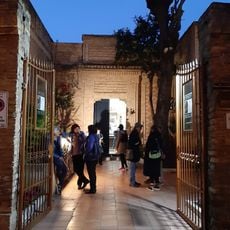
Paparella Treccia Devlet Museum, Art museum in central Pescara, Italy.
The Paparella Treccia Devlet Museum occupies a late-nineteenth-century villa with a rectangular footprint, featuring Doric columns framing three large arched openings across its facade. Inside, visitors find majolica pottery from the 16th through 19th centuries, paintings, and other decorative arts arranged throughout the rooms.
Villa Urania was built in the late 19th century by Baron Giandomenico Treccia of Loreto Aprutino as a summer residence for his wife Urania Valentini, in what was then Castellammare Adriatico. In 1950 the orthopedic surgeon Raffaele Paparella Treccia began assembling the collection, and in 1997 he donated both the villa and the artworks to the foundation named after him and his wife Margherita Devlet, which runs the museum with the Municipality of Pescara.
The collection shows majolica from Castelli, a renowned pottery center, revealing how local craftspeople created decorated ceramics across different periods. These pieces demonstrate the techniques and artistic traditions that made this region's pottery sought after far beyond Italy.
The collection is spread across multiple rooms throughout the villa, allowing visitors to move at a comfortable pace without feeling rushed. It is worth spending time exploring both the artworks and the architectural details of the house itself.
The museum also holds paintings, among them a 15th-century Nativity attributed to the Master of the Imola Triptych, an 18th-century self-portrait by the Tuscan Pietro Santi Bambocci, and 17th-century cathedral interiors linked to Monsù Desiderio, the name given to French-born artists active in Naples.
The community of curious travelers
AroundUs brings together thousands of curated places, local tips, and hidden gems, enriched daily by 92,929 contributors worldwide.