Mineralogy and Litology Museum, Natural science museum in central Florence, Italy
The Mineralogy and Litology Museum in Florence is a natural science collection housing roughly 50,000 specimens of rocks and minerals from across the globe. The display showcases crystals, gemstones, and rock formations in cases that allow visitors to study the variety of mineral structures and colors.
The mineral collections began with the Medici holdings kept in the Uffizi Gallery, separated from the art collections under Pietro Leopoldo and enlarged by Giovanni Targioni Tozzetti in the mid-18th century with about 5,000 samples. The institution's first seat was the Museo di Fisica e Storia Naturale, founded by Pietro Leopoldo of Lorraine in 1775. After Italian unification the Specola complex was split up; the mineralogical and lithological materials moved to via Lamarmora 4 and became an autonomous museum in 1915, then moved to its present seat in 1965.
The Medici collection includes cups, boxes and seals carved from jasper, chalcedony and jade; one jasper cup bears the initials Laur-Med of Lorenzo the Magnificent. A translucent rock-crystal boat-shaped vase comes from the Tribuna of the Uffizi, and a lapis lazuli cup shaped like a shell with sea creatures is mentioned by Vasari.
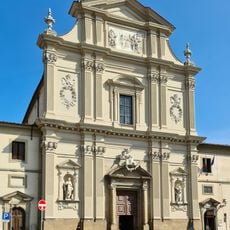
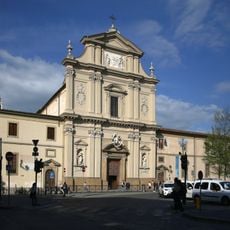
The museum is located in central Florence and is easily accessible on foot. The display cases are clearly labeled, but visitors should allow time to read the detailed information about each specimen.
The collection holds about 45,000 specimens, of which only a small part is displayed. Among the largest pieces are an orthoclase of 600 kg, a smoky quartz of 180 kg and an aquamarine of 98 kg, alongside the 151 kg Brazilian topaz. Around 6,000 specimens come from the Island of Elba, assembled around 1910 by director Federico Millosevich.
The community of curious travelers
AroundUs brings together thousands of curated places, local tips, and hidden gems, enriched daily by 93,670 contributors worldwide.