Palazzo Balbi, Renaissance palace in Dorsoduro, Italy
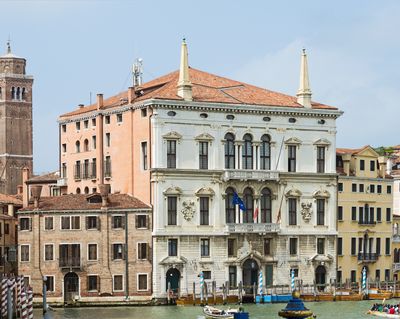
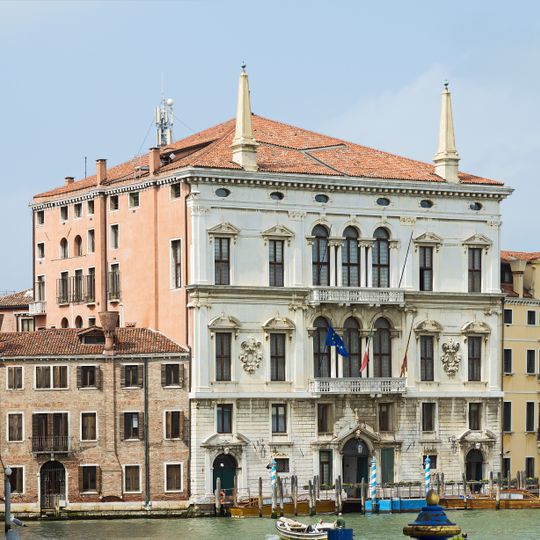
Palazzo Balbi is a Renaissance palace in Venice whose symmetrical facade features a large central portal with a mascaron, flanked by two minor entrances facing the Grand Canal. The structure extends along the water and combines classical Venetian architectural principles with innovative design elements.
Architect Alessandro Vittoria designed this palace in 1582 for the Venetian Balbi family, establishing it as an important example of Renaissance architecture. In the 19th century, Michelangelo Guggenheim acquired the building, marking a new phase in its use.
Since 1971 the palace has housed the President of the Veneto Region and the regional council, so the rooms are working government offices rather than a museum. The 18th-century frescoes by Jacopo Guarana, added in a later restoration, survive inside. The name comes from the Balbi, the patrician family that commissioned the building.
Palazzo Balbi faces the Grand Canal in the Dorsoduro quarter, between Ca' Foscari and Palazzo Caotorta Angaran, at the point called volta de canal. It is a working government seat, so the interior is not open as a museum; the facade is best seen from a vaporetto or the opposite bank.
The building introduced the first window decorations with interrupted tympanums in Venice, crowned by obelisk-shaped pinnacles similar to those on nearby Palazzo Belloni Battagia. This design detail was a novelty in Venetian architecture at the time and influenced later structures.
The community of curious travelers
AroundUs brings together thousands of curated places, local tips, and hidden gems, enriched daily by 94,668 contributors worldwide.