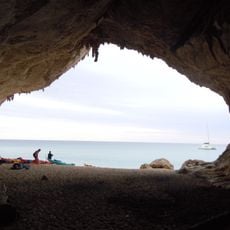
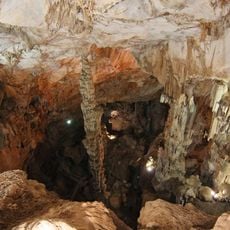
Nuraghe Mannu, Bronze Age archaeological site in Dorgali, Italy
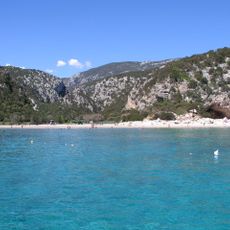
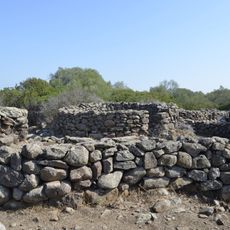
Nuraghe Mannu is a single small tower, 4.70 metres high at its highest point, built of large polyhedral blocks of basalt and trachyte. Its main facade overlooks the mountainous coast above Cala Fuili beach. The east side has a trapezoidal entrance 1.40 metres high, 1.10 metres wide at the base and 0.60 metres at the top. Inside is an irregular elliptical chamber with several closely spaced niches; a staircase existed in the past but is not fully intact today. At its feet lie the remains of a large nuragic village of circular huts and rectangular buildings.
Antonio Taramelli first explored the site in 1927, denouncing local people who took the monument's stones to build their homes and streets. He identified the northernmost and southernmost buildings, both dating to the Roman period. Excavations of the surrounding area continue today.
The niches in the main chamber are now read as guard posts rather than arrow slits, as scholars first supposed. Finds include vase and cup fragments from the Nuragic age and, near the wall, coarse poorly fired pots and pans. Incised herringbone, zigzag and cross motifs, probably sacred symbols, were also found.
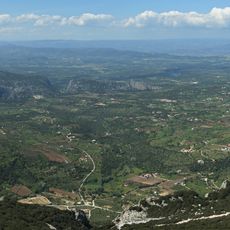
The site stands about 180 m above sea level on a position the sources call awkward to reach, above Cala Gonone and the beach of Cala Fuili. The main entrance is a trapezoidal opening 1.40 m high, 1.10 m wide at the base and 0.60 m at the top. The staircase inside is not intact today, so do not count on climbing it.
Among the finds are pottery shards incised with a fishbone pattern, a cross with a small bar at its base, and zigzag lines, probably sacred symbols normally carved on decorated steles. Antonio Taramelli first reported the site in 1927, denouncing locals who took its stones for houses and roads.
The community of curious travelers
AroundUs brings together thousands of curated places, local tips, and hidden gems, enriched daily by 93,006 contributors worldwide.