Palazzo Cutò, 18th-century palace in Bagheria, Italy
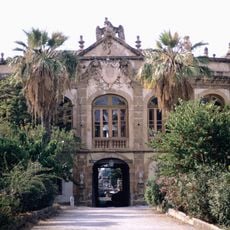
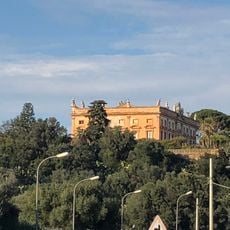
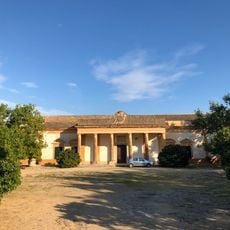
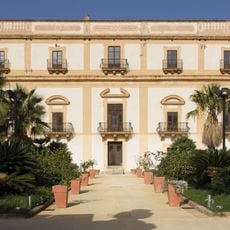
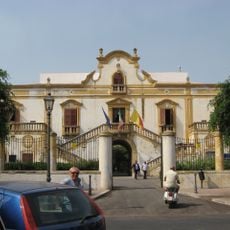
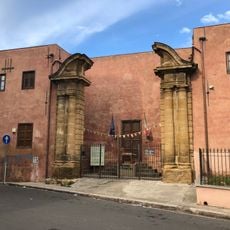
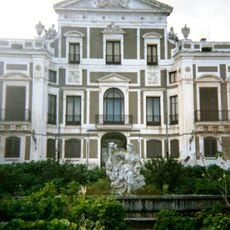
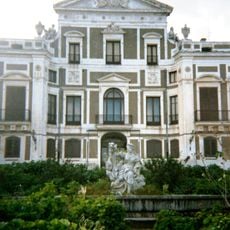
Palazzo Cutò is a massive quadrangular summer villa built in Bagheria between 1712 and 1716 to a design by Giuseppe Mariani. Its fronton carries two allegorical statues in niches, badly mutilated over the years, and a vast belvedere crowns the roof. Inside, a two-ramp staircase leads to the piano nobile, unlike other noble summer houses that used external stairs.
Luigi Onofrio Naselli, prince of Aragona, built the villa between 1712 and 1716 as a summer residence, to a design by the architect Giuseppe Mariani. In 1803 Alessandro Filangeri, prince of Cutò, bought it and replaced the family emblems with the monogram PC, still on the main gate. Giuseppe Tomasi di Lampedusa, author of The Leopard, was among the owners and sold it in 1923; the municipality bought the complex in 1987.
The name Cutò comes from the Filangeri princes who bought the villa in 1803; their monogram PC still marks the main gate. On the belvedere roof terrace the local nobility once gathered for theatrical performances and to watch the fireworks of the Festino di Santa Rosalia. The palace now houses the Francesco Scaduto municipal library, founded in 1956, and the Pietro Piraino toy museum.
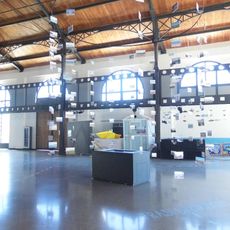
The palace stands near Bagheria's railway station, by the old via Consolare. It now houses the Francesco Scaduto municipal library, the Pietro Piraino toy museum and a multimedia laboratory of the University of Palermo, so access follows the opening hours of these institutions. The upper belvedere and the two-ramp staircase are interior features to look for once inside.
The majolica floor of one room is now kept at the Diocesan Museum of Palermo, not in the palace. The rooftop belvedere once hosted theatrical performances and gatherings to watch the fireworks of the Festino di Santa Rosalia.
The community of curious travelers
AroundUs brings together thousands of curated places, local tips, and hidden gems, enriched daily by 93,154 contributors worldwide.