Palazzo Zapata, Neoclassical palace in central Naples, Italy
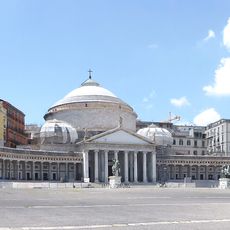
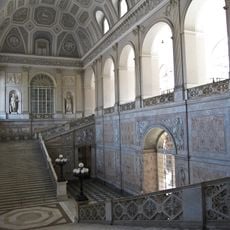
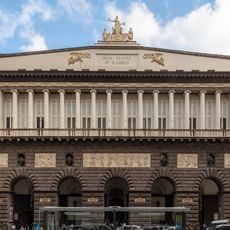
Palazzo Zapata stands on Piazza Trieste e Trento in central Naples. Erected in the 17th century by viceroy Antonio Zapata, it was restructured in neoclassical lines by Carlo Vanvitelli for the physician Domenico Cotugno. Inside are neoclassical and 20th-century decorations, including the reception hall made by Giovan Battista Comencini in 1912; the second floor houses the MUSAP art museum.
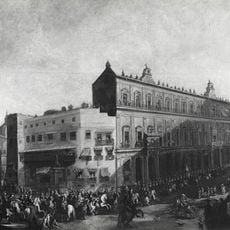
The palace was built in the 17th century by the Spanish viceroy Antonio Zapata y Cisneros. It served as the seat of viceregal power while the nearby Royal Palace was being rebuilt. Carlo Vanvitelli later restructured it in neoclassical lines for the physician Domenico Cotugno, and it was subsequently bought by Baron Girolamo Sarnelli, a close friend of Zapata.
The second floor holds the MUSAP, the Museo Giuseppe Caravita Principe di Sirignano, with several hundred paintings, sculptures and drawings by major artists active in Naples since Italian unification. The Circolo Artistico Politecnico, formed by merging the Società degli Artisti, the Circolo Forense and the Circolo Politecnico, also has its seat in the palace.
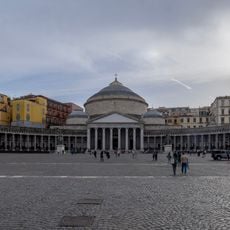
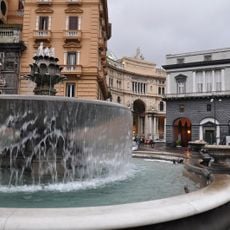
Palazzo Zapata faces Piazza Trieste e Trento, where Via Toledo meets Via Chiaia, a short walk from the Royal Palace and Piazza del Plebiscito. The MUSAP collection and the Circolo Artistico Politecnico occupy the upper floors, so plan a daytime visit and check locally that the rooms are open before climbing up.
The large fresco covering the entrance vault, depicting the town of Avigliano where the Sarnelli family held land and a palace, is entirely lost; only records of it remain. Blessed Gennaro Maria Sarnelli, son of Baron Angelo Sarnelli of Ciorani, was born in the palace on 12 September 1702 according to the Italian source (1720 in the Spanish one).
The community of curious travelers
AroundUs brings together thousands of curated places, local tips, and hidden gems, enriched daily by 94,354 contributors worldwide.