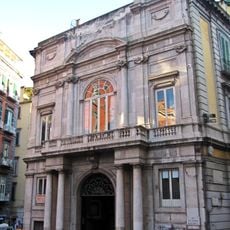
Palazzo De Rosa di Carosino, 19th-century palace on Via Toledo, Naples, Italy.
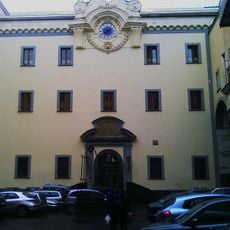
Palazzo De Rosa di Carosino is a 19th-century palace on Via Toledo in Naples, featuring a rusticated exterior with two main entrance portals and balconies distributed across its multiple stories. Inside, a double courtyard system connects grand staircases that lead upward to residential floors where original neoclassical frescoes remain visible.
The site was empty in 1775, when the Porta dello Spirito Santo was demolished. In 1804 an unfinished building with two portals on Via Toledo and a rear garden, commissioned by Prince Pignatelli di Monteleone, stood here. Francesco Bernardo De Rosa bought the plot in 1825 and had Pietro Valente enlarge it, completing it in 1834. De Rosa's father Andrea had risen from hemp comber in Afragola to contractor and baron.
The palace reflects how wealthy Neapolitan families and professionals lived during the 1800s, with spaces designed for different classes of residents. The surviving interior decorations and frescoed rooms still show the tastes and habits of those who once inhabited these apartments.
The building sits on a busy street in central Naples, making it easy to reach on foot, though the area can be crowded and noisy. Keep in mind that not all interior spaces may be open to the public, so checking visit conditions beforehand is advisable.
The palace was conceived from the start as a rental block rather than a single family residence, with dozens of apartments let to wealthier and less wealthy tenants, among them the barons de Gemmis and the magistrate Baron Donato Perillo. It is counted among the first large condominiums of 19th-century Naples, decades before bourgeois apartment buildings spread across European cities.
The community of curious travelers
AroundUs brings together thousands of curated places, local tips, and hidden gems, enriched daily by 93,036 contributors worldwide.