Port of Civitavecchia, Major Mediterranean cruise port in Civitavecchia, Italy
The Port of Civitavecchia is a multifunctional seaport divided into two areas: the south side serves tourism, yachting and cruises, the north side handles commercial traffic, fishing and cabotage. It has about 1,900,000 m² of quays, 25 operational berths of 100 to 400 m and roughly 13 km of moorings. The original Trajanic basin was almost circular, about 500 m across, with two piers and an artificial breakwater island.
The Romans built this port under Emperor Trajan and made it a major naval center of their empire. Centuries later, the popes enhanced and fortified the harbor, especially during the Renaissance when they constructed defensive structures.
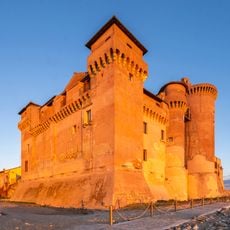
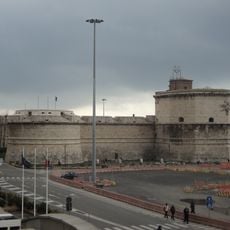
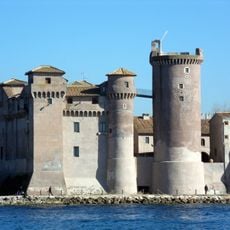
The name "Port of Rome" survives from Trajan's day, when the harbour fed the capital's grain supply. Pope Julius II gave the Fort Michelangelo commission to Bramante in 1508; it was finished in 1537, perhaps with Michelangelo's help, on Roman ruins. The crenellated walls were added by Pier Paolo Florian for Urban VIII in 1630.
The port is split into a southern area for cruises and yachting and a northern area for commercial traffic and fishing. Trains from Civitavecchia station connect to Roma Termini and other Rome stations via the FL lines, and the Civitavecchia Express runs twice daily in the tourist season with seat reservation. The PortLink service links the station to the port.
The two surviving towers of the Roman harbour, the Bicchiere and the Lazzaretto, still stand at the entrance; the Lazzaretto was rebuilt by Giuliano da Sangallo. The 31-metre lighthouse raised in 1608 under Paul V on the southern tip of the breakwater island was destroyed by bombing in 1943.
The community of curious travelers
AroundUs brings together thousands of curated places, local tips, and hidden gems, enriched daily by 94,361 contributors worldwide.