Parco minerario di Floristella-Grottacalda, Mining park in Piazza Armerina, Italy.
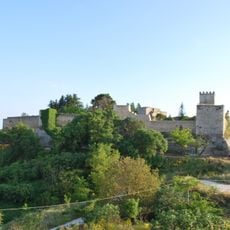
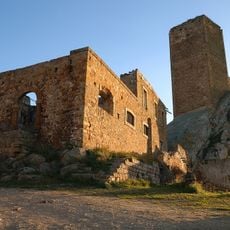
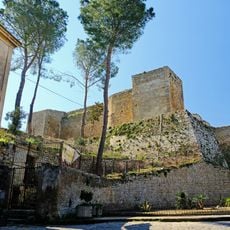
The Floristella-Grottacalda Mining Park covers 400 hectares at the junction of roads linking Enna, Piazza Armerina, Valguarnera Caropepe and Aidone. It preserves about 180 inclined access tunnels, three extraction shafts with headframes and winch rooms (the oldest dating to 1868), old calcarelle and calcaroni, and Gill sulfur furnaces built around 1880, along with miners' housing. Palazzo Pennisi, the owners' residence, still stands.
Sulfur mining at Floristella and Grottacalda began in the late 18th century and brought European-scale wealth to the province of Enna. In the 1930s the mines were leased out, revived during World War II, and acquired by the Region in the late 1960s. Extraction ceased in 1986, and the park authority was created by regional law no. 17 of 1991.
The park reveals how mine owners and workers lived in separate worlds, visible in buildings like Palazzo Pennisi. These structures tell the story of the sharp social divisions that shaped daily life during the mining era.
The site is best visited by car since the mining area is spread out and walking the entire park would be tiring. Guided tours are available and help explain the scattered ruins and industrial structures throughout the grounds.
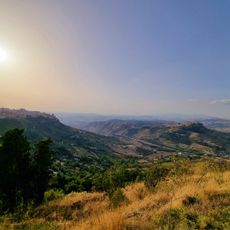
In the northern part of the park, small vents release methane, salt water and iron-rich water, while a sulfurous spring feeds the Rio Floristella. The mud volcanoes, called maccalube, are visible in this northern area. The park also lies at one corner of a triangle formed with Lake Pergusa and the Ronza wildlife park.
The community of curious travelers
AroundUs brings together thousands of curated places, local tips, and hidden gems, enriched daily by 93,744 contributors worldwide.