Porta Rosa, Ancient limestone gate in Ascea, Italy
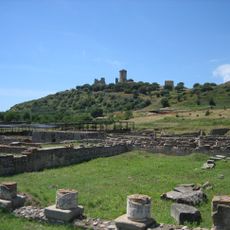
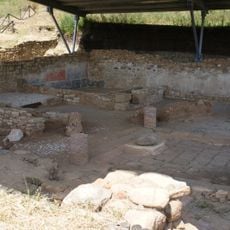
Porta Rosa is an ancient stone gateway in Ascea, built from large limestone blocks as one of the main entrances to the Greek colony of Velia. The arch spans a paved passageway wide enough to allow both people and carts through, and the surrounding wall sections are still partly standing on either side.
Built in the 4th century BCE, the structure was not a gate but a viaduct in the wall linking the two natural summits of Elea-Velia's acropolis; no trace of hinges survives. Around the 3rd century BCE it was blocked and buried, probably by a landslide or because the opening weakened the city's defences. The burial preserved it intact until Mario Napoli unearthed it on 8 March 1964.
The name "Porta Rosa" was given by archaeologist Mario Napoli, who unearthed the structure on 8 March 1964 and named it after his wife, Rosa, sister of archaeologist Alfonso De Franciscis. The opening was long called a gate, but no traces of hinges were found; it actually served as a viaduct and as a retaining wall for the sides of the gorge it crosses.
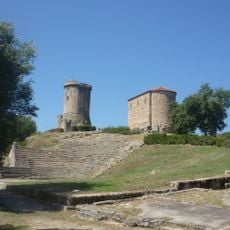
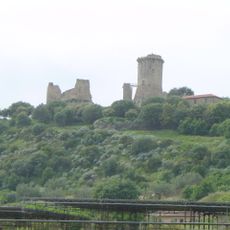
Porta Rosa is part of the Archaeological Park of Elea-Velia and can only be visited as part of a walk through the wider site. The paths around the gateway are uneven, so sturdy footwear is a good idea before setting out.
The name Rosa was given by archaeologist Mario Napoli, who unearthed the structure on 8 March 1964 and named it after his wife, the sister of archaeologist Alfonso De Franciscis. The opening was long called a gate, but no hinges were ever found; it actually served as a viaduct and as a retaining wall for the gorge it spans.
The community of curious travelers
AroundUs brings together thousands of curated places, local tips, and hidden gems, enriched daily by 92,785 contributors worldwide.