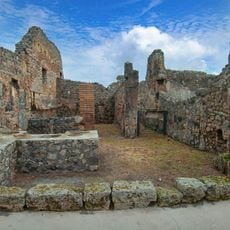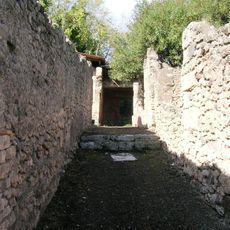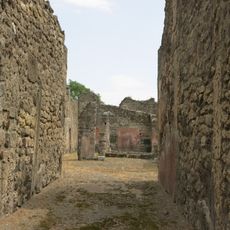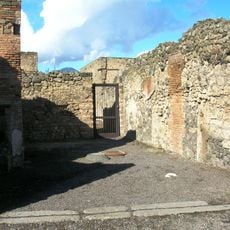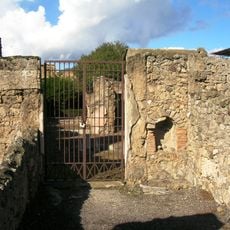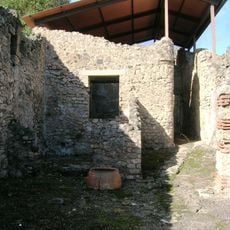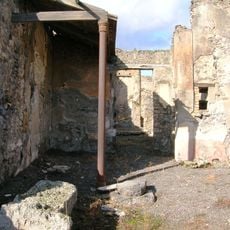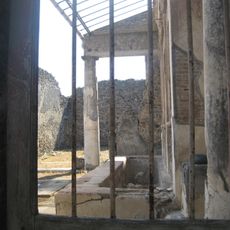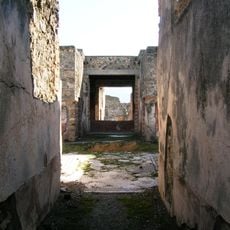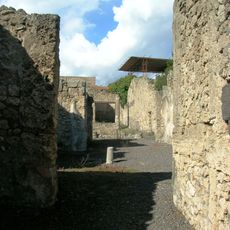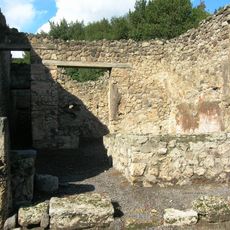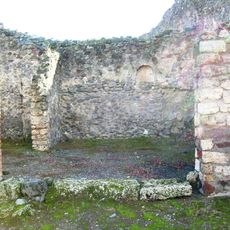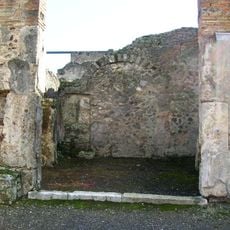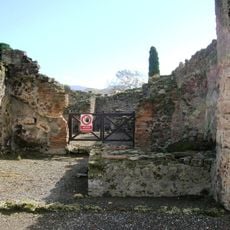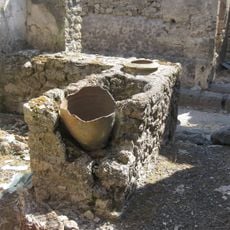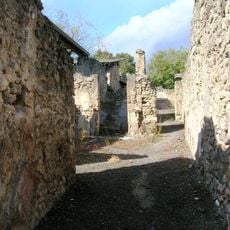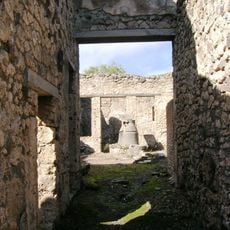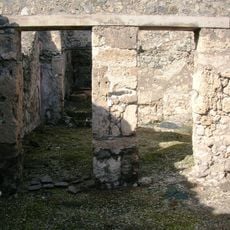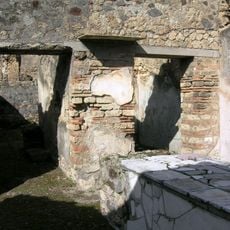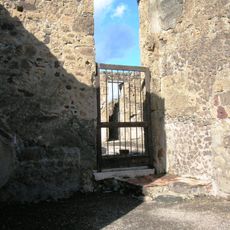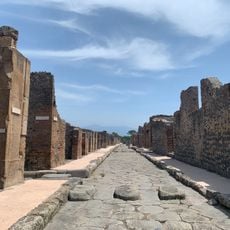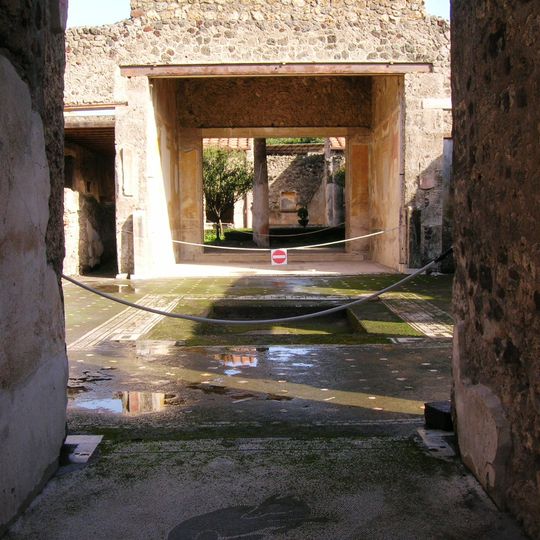
Region V of the archaeological excavations of Pompeii, Archaeological site in Pompeii, Italy.
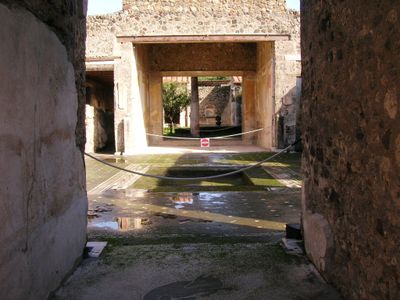
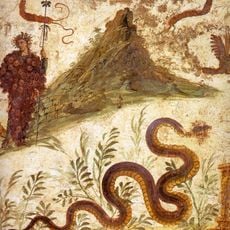
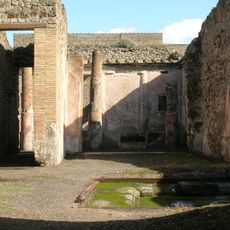
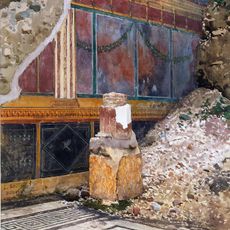
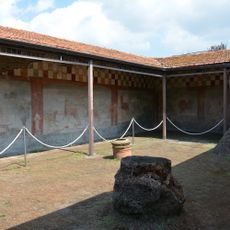
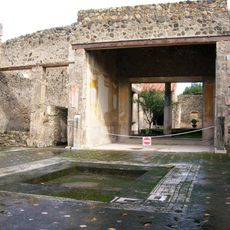
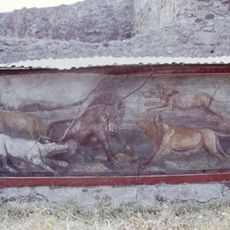
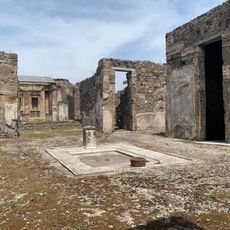
Region V of the archaeological excavations at Pompeii is a residential area with many houses that preserve their original wall decorations, floor mosaics, and Roman architectural structures from the 1st century. The area contains dwelling buildings of varying sizes and styles, offering a cross-section of ancient domestic life.
Region V occupies the unexcavated northern-central part of Pompeii, bounded by the city wall and the Porta del Vesuvio to the north, the Via di Nola to the south and the Via del Vesuvio to the west; its eastern limit is imprecise because that sector still lies under volcanic material. The whole city was buried in the eruption of Vesuvius in 79 AD, and work in this regio has concentrated on bringing its insulae and houses to light.
Region V covers the northern centre of Pompeii, bounded by the city wall and the Porta del Vesuvio to the north, the Via di Nola to the south and the Via del Vesuvio to the west; its eastern edge is undefined because that part of the city is still unexcavated. The insulae are numbered 1 to 7, and the monuments are listed by insula.
Region V lies in the northern-central part of Pompeii, bounded by the city wall and the Porta del Vesuvio to the north, the Via di Nola to the south and the Via del Vesuvio to the west; its eastern edge is unexcavated. Enter from the main excavation routes and follow the footpaths between the insulae. The ground is uneven and rocky, so wear sturdy shoes and allow several hours.
Recent excavations here uncovered dining rooms decorated with elaborate mythological frescoes, revealing how Romans invested in artistic decoration for their meal spaces. These discoveries have reshaped our understanding of the creativity and diversity found in Roman domestic design.
The community of curious travelers
AroundUs brings together thousands of curated places, local tips, and hidden gems, enriched daily by 92,789 contributors worldwide.