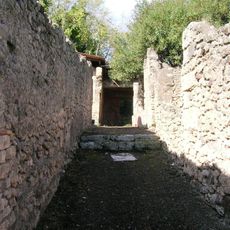
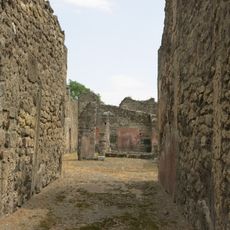
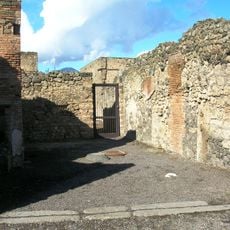
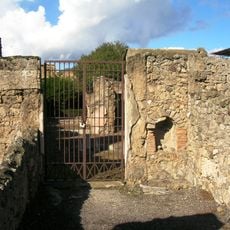
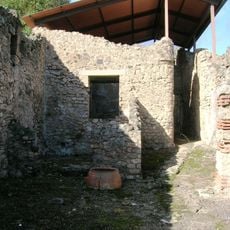
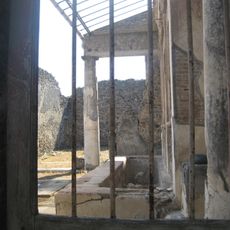
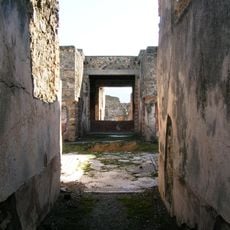
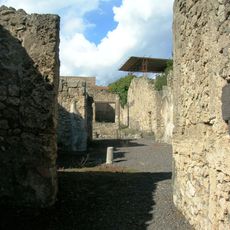
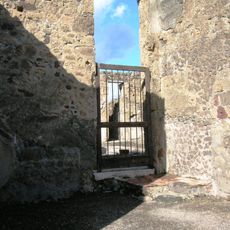
House of the Silver Wedding, Ancient Roman domus in Pompeii, Italy
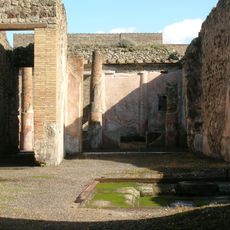
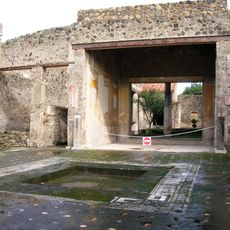
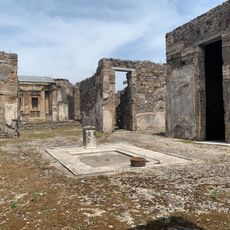
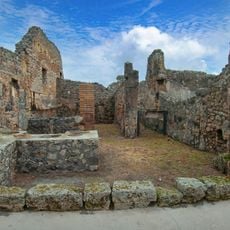
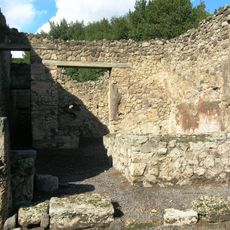
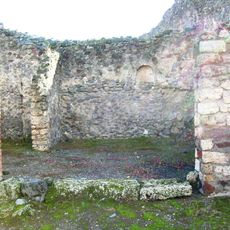
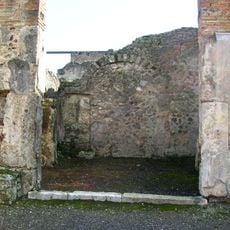
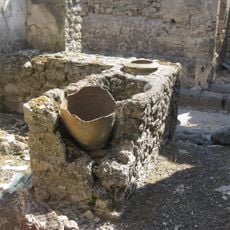
The House of the Silver Wedding is a Roman domus in Pompeii, built around 300 BC and renovated in the early 1st century AD. Its atrium, among the largest in the city, has four tall Corinthian columns supporting a compluviate roof with palmette antefixes and lion-headed gutter spouts. Two gardens include one with a central pool and triclinium, and another with a bath-house, open-air swimming pool, kitchen, and a room with a mosaic floor and barrel-vaulted ceiling on four octagonal columns painted to imitate porphyry.
The domus was built around 300 BC in the Samnite period and modernised in the early 1st century AD under Augustus. It was buried by ash from the eruption of Vesuvius in 79 AD. Excavation took place in 1893, the year of the silver wedding anniversary of Umberto I and Margherita of Savoy, whose name the house received.
The house takes its name from the silver wedding anniversary of King Umberto I and Queen Margherita of Savoy, celebrated in 1893, the year the domus was excavated. The rooms are labelled by number in the insula 2 of Regio V, and visitors can still read the excavation name on site signage.
The site is located within the archaeological area of Pompeii and can be visited like other ruins there. It is helpful to wear comfortable shoes since the ground is uneven and the sun can be intense during warm months.
The house takes its name from the silver wedding anniversary of King Umberto I and Queen Margherita of Savoy, celebrated in 1893, the year of excavation. Its paintings were fully published in a single volume in 2002, part of a German Archaeological Institute project recording Pompeii's houses.
The community of curious travelers
AroundUs brings together thousands of curated places, local tips, and hidden gems, enriched daily by 93,034 contributors worldwide.