Rofalco, late-Etruscan settlement
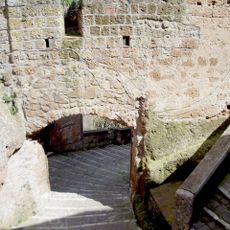
Rofalco is a late-Etruscan fortified settlement at the edge of the Selva del Lamone plateau, about 3 km from Farnese. Its dry-stone walls of local volcanic stone enclose just over 1.5 hectares in a 330 m arc above the Olpeta valley; they reach 6 m thick and nearly 4 m high, with at least three square towers about 6 m wide.
Rofalco was founded by the Etruscans to control a key trade route between the coast and inland areas. The fortress was conquered by the Romans in the early 3rd century BCE and subsequently abandoned.
Excavations since 1996 have been run by the Gruppo Archeologico Romano with the Soprintendenza, and over 550 Italian and foreign volunteers have dug here. Visitors can see the trenches and cleared masonry they uncovered, and the site is presented as a volunteer training ground rather than a museum display.
The site is easy to access and can be explored on foot with information boards explaining different areas. Visitors should expect uneven terrain and open ground, so sturdy footwear and water are recommended.
Clay sling bullets were found both in the destruction layers and on the topsoil at Rofalco. Together with the absence of pottery later than the first decades of the 3rd century BCE, they tie the site's end to the Roman consul Tiberius Coruncanius, whose triumph over the people of Vulci is recorded for 280 BCE.
The community of curious travelers
AroundUs brings together thousands of curated places, local tips, and hidden gems, enriched daily by 94,599 contributors worldwide.