Rotonda Antonelliana, 19th century religious building in Castellamonte, Italy.
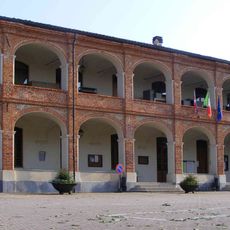
The Rotonda Antonelliana is a circular building from the 19th century in Castellamonte made of stone from the Orco river and red bricks forming a distinctive round shape. The enclosed interior space is defined by high perimeter walls that create a sheltered circular courtyard.
Construction began in 1842 with the backing of Castellamonte's citizens, following Alessandro Antonelli's plan for a church almost as large as St Peter's Basilica in the Vatican. After the perimeter walls and part of the columns were built, work was abandoned in 1846 for lack of funds. The unfinished shell survives as the Rotonda Antonelliana.
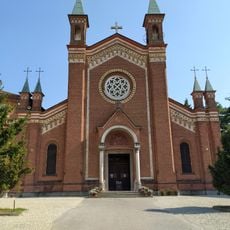
The parish church of Saints Peter and Paul, built between 1871 and 1875 to a design by the Turin architect Luigi Formento, occupies the space the original project reserved for the presbytery. It is neo-Gothic in style, so the round enclosure and the church inside belong to two different architectural phases. The name Rotonda comes from the circular form of Antonelli's unfinished walls.
The circular space inside hosts various public events throughout the year, including the annual Ceramics Exhibition of Castellamonte. Visit during event times to see the venue in active use, or explore the structure itself when exhibitions are not taking place.
The rotunda was meant to be almost as large as St Peter's Basilica in the Vatican, a scale recorded in Antonelli's project for Castellamonte. Only the perimeter walls and part of the columns were built before work stopped in 1846. The parish church of Saints Peter and Paul, designed by Luigi Formento, was later fitted into the space intended for the presbytery.
The community of curious travelers
AroundUs brings together thousands of curated places, local tips, and hidden gems, enriched daily by 93,528 contributors worldwide.