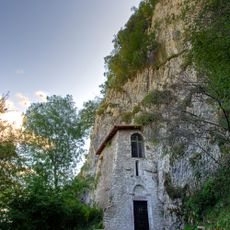
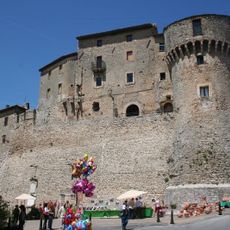
San Salvatore Maggiore, Benedictine abbey in Concerviano, Italy
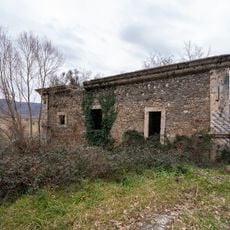
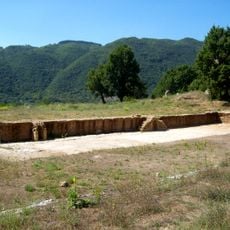
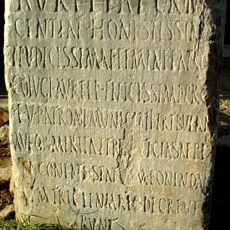
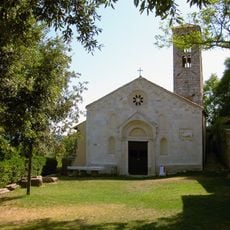
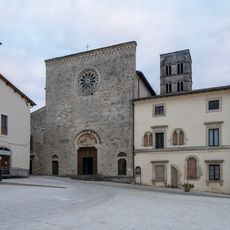
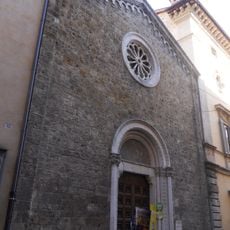
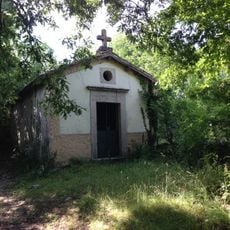
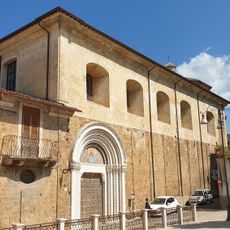
San Salvatore Maggiore is a former Benedictine abbey on the Letenano plateau in the frazione of Pratoianni, Concerviano, built over the ruins of a Roman villa. A reused Roman sarcophagus slab, the Lapide di Sesto Tadio, serves as the basin of a fountain inside the complex, and structural traces of the villa survive in the monastery walls. The abbey church and monastic buildings stand near the road identified by Niccolò Persichetti as the Via Caecilia.
The abbey was founded in 735 and developed into an imperial monastery under Charlemagne with significant political weight. Pope Paschal I later granted it relics of Saint Hippolytus, which elevated its spiritual authority across the wider region.
The title of abbot of San Salvatore Maggiore survived the abbey's suppression in 1629 and passed in 1841 to the bishop of Poggio Mirteto; since 1925 it belongs to the bishop of Rieti. The nearby village of Vaccareccia is the closest settlement to the complex, which lies in the frazione of Pratoianni, Concerviano.
The abbey lies between the Salto and Turano river valleys and is accessible via a paved road suitable for cars. A visit allows easy exploration of the grounds and buildings, though some areas may require careful navigation depending on current conditions.
The abbey's archive has disappeared, so its history was pieced together from records kept at the nearby Abbey of Farfa. A Roman funerary slab, the Lapide di Sesto Tadio, was reused as the basin of a fountain inside the complex; some scholars link the site to the villa of senator Tadio Nepote.
The community of curious travelers
AroundUs brings together thousands of curated places, local tips, and hidden gems, enriched daily by 93,136 contributors worldwide.