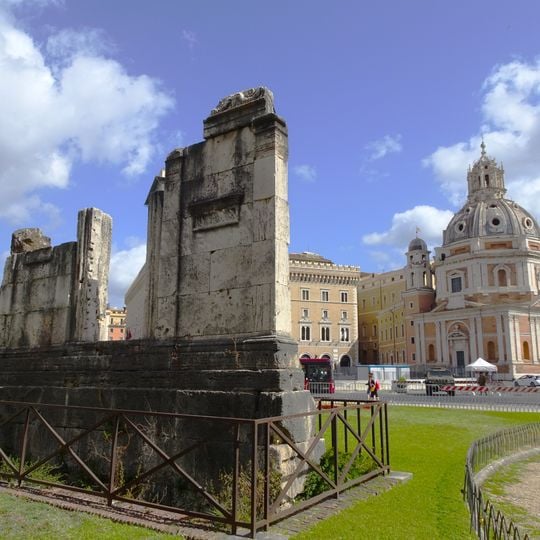
Sepulcrum Bibuli, Republican funerary monument near Piazza Venezia, Rome, Italy.
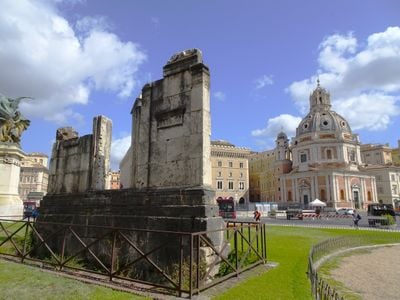
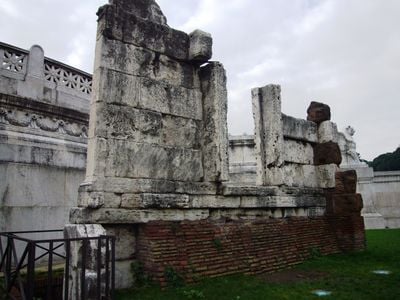
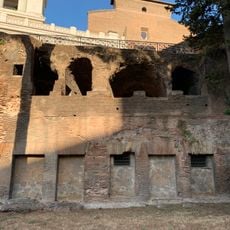
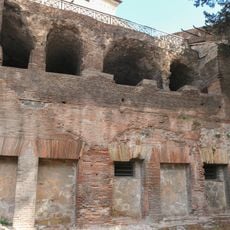
The tomb of Gaius Publicius Bibulus survives as a single west wall of the original rectangular cella, built of Aniene tufa and travertine, standing a few metres from the left side of the Vittoriano beside the flowerbed in front of the Fountain of the Adriatic. Its buried podium once carried a small temple in antis with a shallow porch. The wall facing the Vittoriano holds a central door between four Tuscan pilasters, framed by two panels, with a partly preserved frieze of garlands, bucrania and rosettes.
Dated to the early 1st century BC, the tomb was granted by the Senate to Gaius Publicius Bibulus, plebeian aedile, for his merits, on public ground and free of charge for him and his descendants. Livy records him as tribune of the plebs in the 209 BC prosecution of Marcus Claudius Marcellus. It stood along the Clivus Argentarius outside the Servian Walls.
The facade displays Tuscan pilasters and decorated friezes with garlands, rosettes, and ox-skulls in the style of the Republican era. These ornaments showed the family's wealth and status within Roman society.
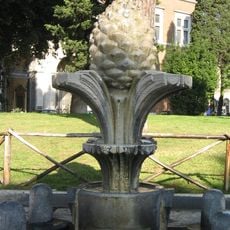
The surviving west wall stands beside the left side of the Vittoriano, by the flowerbed in front of the Fountain of the Adriatic Sea, a short walk from Piazza Venezia. A low iron railing protects the base carrying the dedicatory inscription. The monument was restored between November 2024 and February 2025.
Only the west side's inscription is fully legible today; the text records that the Senate and people granted the aedile Gaius Publicius Bibulus a monument on public ground, free of charge, for himself and his descendants. Livy mentions him as tribune of the plebs in the 209 BC prosecution of Marcus Claudius Marcellus.
The community of curious travelers
AroundUs brings together thousands of curated places, local tips, and hidden gems, enriched daily by 92,850 contributors worldwide.