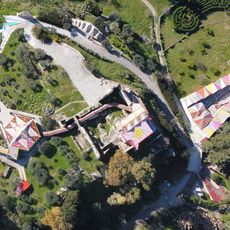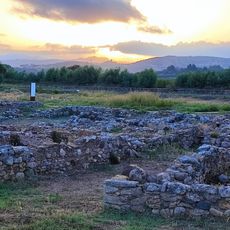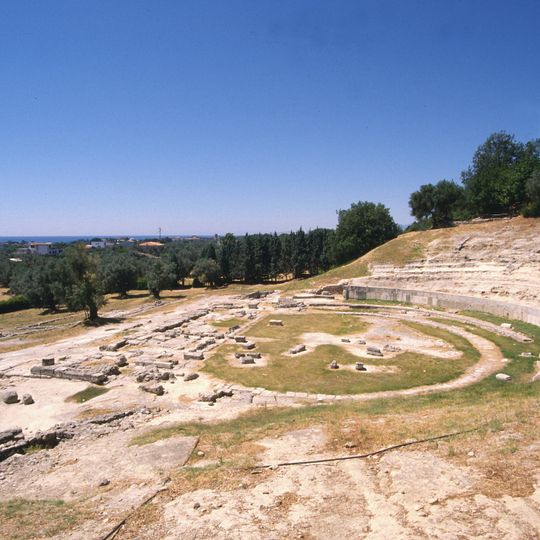
Roman Theatre of Locri, Roman theatre ruins in Locri, Italy.
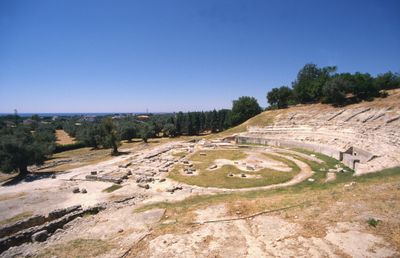
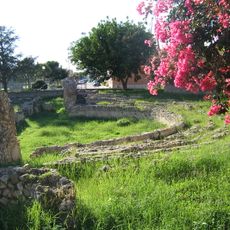
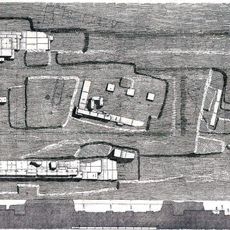
The Roman Theatre of Locri is a ruined venue with stone walls, tiered seating areas, and stage foundations scattered across the archaeological site in southern Italy. Its layout reveals the classical design used for public performances in ancient times.
Greek Locri Epizefiri, first settled on the Zefiro promontory, moved to the plain below around 670 BC after defeating the Siculi. Rome took the city in 205 BC following its ambiguous stance in the Punic Wars, and the theatre was built in the 1st century BC on a Greek layout of the 4th century BC. It was uncovered in 1940 by Paolo Enrico Arias, with excavations completed in 1957 by Alfonso De Franciscis.
The theatre served as a gathering place where residents watched performances that blended Greek and Roman entertainment traditions. The layout of the seating shows how the community came together for events that mattered to their daily life.
The site can be reached via Contrada Pirettina street in town and is generally open for exploration of the remains. Bring sun protection and water since there is little shade across the archaeological area.
The cavea rests on the natural slope of the Cusemi hill and opens wider than a semicircle, holding up to 4,500 spectators. From the tiers, cut partly into the soft local sandstone, viewers looked out over the city and the sea.
The community of curious travelers
AroundUs brings together thousands of curated places, local tips, and hidden gems, enriched daily by 94,389 contributors worldwide.