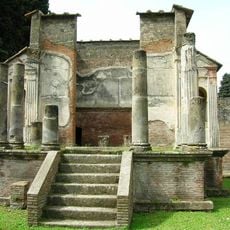
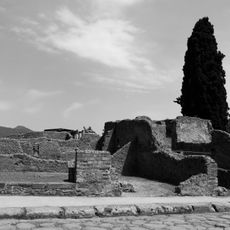
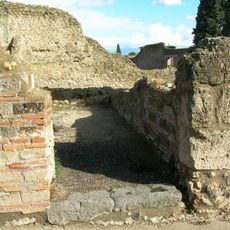
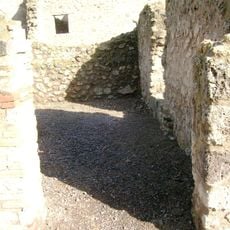
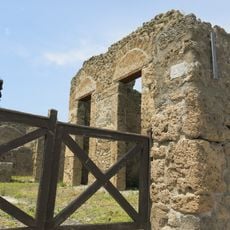
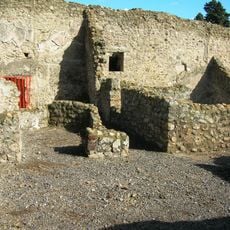
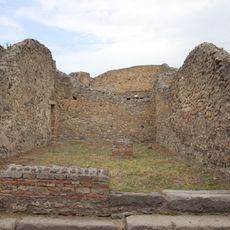
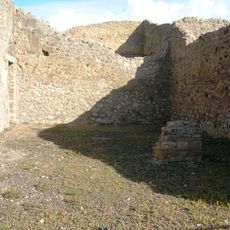
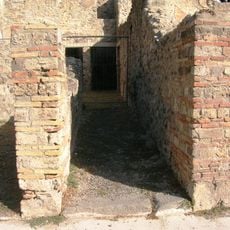
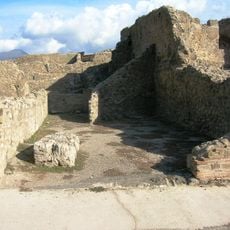
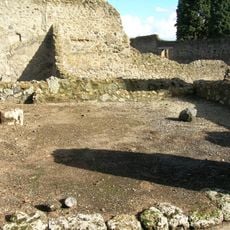
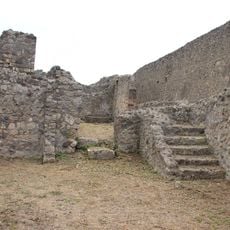
Doric temple, Roman temple in Pompeii, Italy.
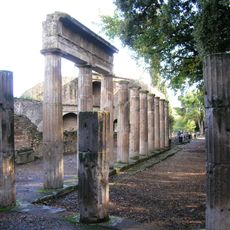
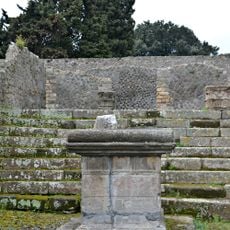
The Doric temple stands on the west side of Pompeii's Triangular Forum, measuring 29 by 20 metres. Its tuff and limestone steps, unequal on each side to follow the slope, lead to a podium rebuilt in later restorations. Traces remain of eleven columns on the long sides and seven on the short ones, with shafts of Sarno limestone and Samnite-era tuff capitals.
This structure was built in the 6th century BC using stone from the Sarno valley and underwent several changes over time. These alterations show how the temple adapted to the changing needs of the city.
An Oscan inscription found nearby suggests the temple was dedicated to Hercules or Minerva. The sacred area was enclosed by a low wall, and the space around it probably served spectators of the neighbouring theatres as a resting place or, when the wall was lined with spikes, for horse races.
The temple stands on the west side of the Triangular Forum, on a podium cut directly into the rock, reached by tufa or limestone steps whose number varies from side to side to follow the slope. Only traces of the columns and capitals remain, so look at the ground for the footings and at the nearby masonry for the Sarno limestone drums.
The temple was probably dedicated to Hercules or Minerva, as an Oscan inscription found nearby indicates. Among the finds is a metope showing the myth of Ixion, bound to the wheel of the Underworld between Hephaestus and Athena.
The community of curious travelers
AroundUs brings together thousands of curated places, local tips, and hidden gems, enriched daily by 94,188 contributors worldwide.