Tempio italico, Archaeological site in Castel di Ieri, Italy.
The Tempio italico at Piè di Franci, in Castel di Ieri, preserves the podium of Temple A, a 15.12 m by 19.80 m platform of polygonal masonry faced with limestone slabs and reached by a frontal staircase. Behind a four-column pronaos with Ionic capitals lay three chambers; the central one keeps the base of the cult statue at the back of a niche. Temple B, the older building, lies buried about 2 m below.
The older Temple B originated in the 4th century BCE, while the later Temple A was built in the 2nd century BCE using materials from the previous structure. The transformation reveals continuous use and adaptation of the sanctuary across multiple periods.
The central chamber once held a religious statue and displays geometric patterns across its floor, while traces of painted plaster remain visible on the walls. This decoration reveals the beliefs and artistic skills of those who lived here.
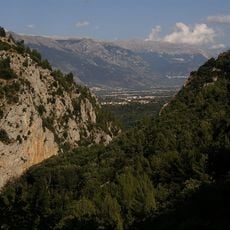
The site lies along the Claudia Nova provincial road towards Goriano Sicoli, in the Piè di Franci locality, at the foot of a rocky wall where a spring once flowed. The excavated area covers 120 by 90 metres, and Temple B is now buried, so the visible podium and frontal staircase belong to Temple A. Excavation by the Abruzzo archaeological superintendency began in 1987.
The central room's floor mosaic frames a black-and-white labyrinth; at its corners are a Greek cross, an hourglass laid horizontally as a symbol of infinity, a compass rose and a rostral cross. At the centre, a white triangle points west toward Rome, and a two-line inscription names the Sergia tribe magistrates who restored the temple.
The community of curious travelers
AroundUs brings together thousands of curated places, local tips, and hidden gems, enriched daily by 94,645 contributors worldwide.