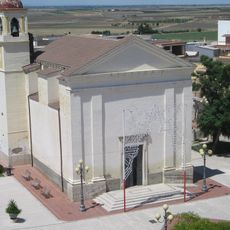
Torre Alemanna, Tower in Cerignola, Italy
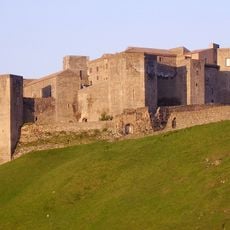
Torre Alemanna is a rural complex near Cerignola with a square watchtower about 10 metres wide and 24 metres high. Around it stand buildings added over centuries for housing, production and worship. The tower's ground-floor room has a ribbed cross vault on four columns with Gothic crocket capitals.
The name Torre Alemanna appears in a 1334 document of the Codice diplomatico barlettano, where a property boundary is described as a "viam qua itur a Turri de Alamagnis". The toponym also appears in later records and modern cartography as Torre de la Manna. The Alemanna name refers to the Teutonic Knights, to whom Frederick II granted lands near Corneto in the 13th century.
The name Alemanna refers to the Teutonic Knights, to whom Frederick II granted lands near Corneto in the 13th century. Between the 14th and 15th centuries the bailiwick held over 2,800 hectares and its livestock and cereal output also supported San Leonardo di Siponto, on which it depended. In 1483 the knights sold the estate to the Church, which ran it as a consistorial commendam through procurators.
The complex lies 18 km from Cerignola on the provincial road to Candela, at a crossroads of two tratturi, the historic transhumance routes. It is now part of the rural hamlet Torre Alemanna-Borgo Libertà, founded in 1951. Access is by private vehicle; the site is in open farmland far from town.
The loggia built in 1750 by Diego Ingellis, procurator of Cardinal Pasquale Acquaviva d'Aragona, links the Abbot's Palace to the tower and was added after the 1731 earthquake. The same campaign created the main entrance on the southeast side. The tower's ground-floor room has a ribbed cross vault on four columns with Gothic crocket capitals.
The community of curious travelers
AroundUs brings together thousands of curated places, local tips, and hidden gems, enriched daily by 93,859 contributors worldwide.