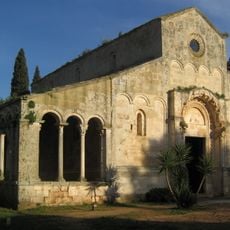
Valesio, Archaeological site in Torchiarolo, Italy.
Valesio is an archaeological site near Torchiarolo in Puglia where ancient building foundations, walls, and structural remains have been uncovered across multiple excavation areas. The exposed elements reveal how people arranged their settlement and used different spaces over time.
Valesio was a Messapian city that struck its own coin and flourished between the 6th and 1st centuries BC, ringed by walls about 3,430 m long enclosing 84 hectares. In Roman times it served as a statio on the Via Traiana between Brundisium and Lupiae, and a bath complex found in the 1960s was dated by its pottery to the early 4th century AD, when Constantine restored the road. Antonio De Ferrariis (il Galateo) records that the Norman king William the Bad razed the city in 1157.
Locals call the site 'Valisu', and the Messapian tombs found here carry inscriptions such as 'tabara damatura', read by scholars as 'devoted to the goddess Demeter' or 'tomb of the priestess of Demeter'. Valesio was one of the Messapian cities that struck its own coinage, a sign of its commercial weight in the Salento peninsula.
The site is reachable from the village of Torchiarolo and is best explored with expert guidance to make sense of the excavations. Comfortable shoes are important since pathways cross uneven terrain.
Valesio struck its own coinage as one of the Messapian cities, evidence of its commercial weight in the Salento economy. The Brindisi museum's Sala Valesio holds the finds, including clay spheres probably used as catapult ammunition; locals in Torchiarolo call the place 'Valisu'.
The community of curious travelers
AroundUs brings together thousands of curated places, local tips, and hidden gems, enriched daily by 94,053 contributors worldwide.