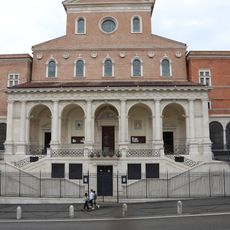
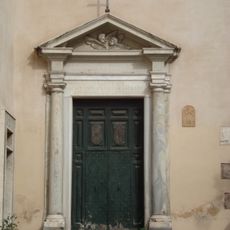
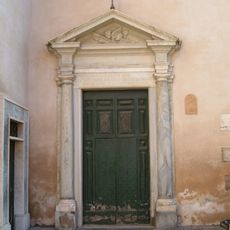
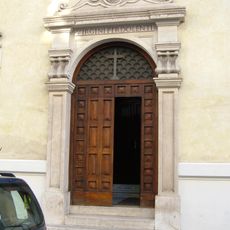
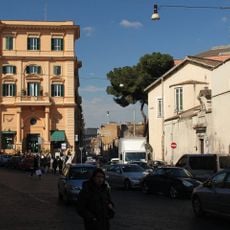
Triclinium Leoninum, Archaeological site at Lateran district, Rome, Italy.
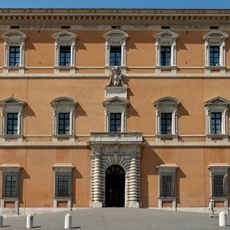
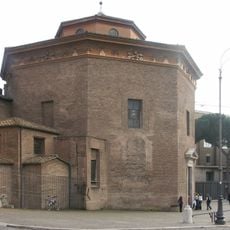
The Triclinium Leoninum, also called the Nicchione del Laterano, is the surviving rear section of Pope Leo III's banquet hall in the Lateran Palace, modelled on a hall of the imperial palace of Constantinople. What remains is a large brick niche with a polifora facade, once preceded by a closed portico with three doors facing the Lateran field and a fourth leading to the palace.
Pope Leo III built the banqueting hall in the early 9th century as part of the Lateran Palace, modelled on a hall of the imperial palace of Constantinople. Pope Leo IV restored it while it was still intact. In the late 16th century Sixtus V demolished the old palace but kept the Triclinium; Ferdinando Fuga's restoration of 1743 gave the surviving structure its present form.
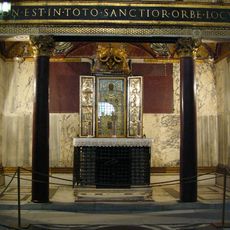
The apse mosaics show Christ handing keys to Peter and represent the connection between religious and secular authority. This visual message shaped how people understood the relationship between the Church and imperial power in medieval times.
The site is located near San Giovanni in Laterano Cathedral and is accessible on foot but lies beneath modern street levels. Visiting may require special arrangements or have limited access depending on the current condition and opening policies of the site.
The three-part mosaic in the apse may preserve parts of the original work: Christ sends the Apostles on their mission in the centre, hands the keys to Saint Peter and the labarum to Constantine on the left, and Saint Peter gives the stole to Leo III and the insignia to Charlemagne on the right.
The community of curious travelers
AroundUs brings together thousands of curated places, local tips, and hidden gems, enriched daily by 93,287 contributors worldwide.