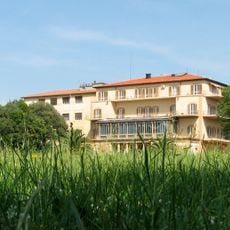
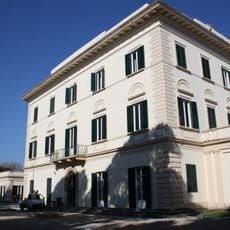
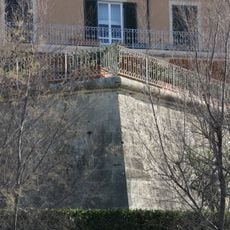
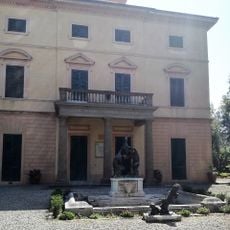
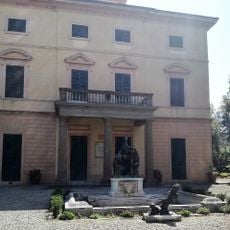
Villa Maurogordato, 19th-century estate in Monterotondo, Italy.
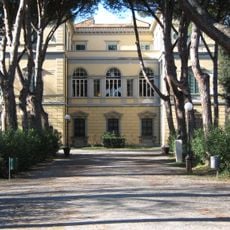
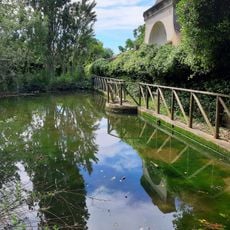
Villa Maurogordato is a 19th-century estate near Livorno with a main building and supporting structures set within an eight-hectare garden. The grounds contain Lebanese cedars, Aleppo pines, and other Mediterranean plants that shape the landscape.
Giuseppe Calamai, Russian consul and Livorno merchant, bought the estate in 1771 and kept it as a country residence until the Calamai family's financial collapse led to its sale in 1821 to Count Giovanni Giraud. It then passed to the Polish prince Stanisław Poniatowski, and after his death in 1833 to his widow Cassandra Luci and their children, who sold it in 1847 to the Greek-origin merchant Pandely Maurogordato.
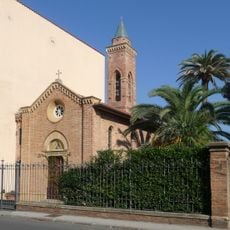
The villa's name comes from Pandely Maurogordato, the Greek-origin Livorno merchant who bought it in 1847; the estate is also called Villa di Monterotondo after its locality. The Maurogordato laid out the romantic garden, and the Livorno artist Giuseppe Maria Terreni probably worked on the building's decoration. The former chapel, restored, now houses a cultural association.
The villa and its park are protected under Law 1089/1939 by a declaration of 9 December 1980, but the building stands in a state of complete abandonment and no recovery project has reached final approval. The garden is used by the Municipality of Livorno, while the former chapel, sold in 2000 and fully restored, now houses a cultural association. Expect overgrown, unmaintained paths rather than a visitable estate.
A winter garden structure was designed in 1871 by the Gambaro brothers foundry and remains a notable example of local ironwork. This structure showcases the craftsmanship required for such specialized constructions of the late 19th century.
The community of curious travelers
AroundUs brings together thousands of curated places, local tips, and hidden gems, enriched daily by 94,007 contributors worldwide.