Roman Odeum of Taormina, Roman odeon in Taormina, Italy
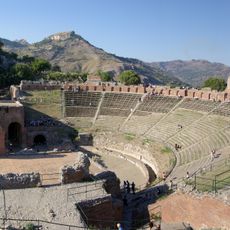
The Roman Odeum of Taormina is a small ancient theater with three main sections: a stage area, an orchestra space, and a five-section seating area for audiences. The remains allow visitors to see how the different parts of the structure once functioned together.
The Odeum was built in the 1st century BC during the reign of Octavian Augustus, not around 21 BC. It was a covered theatre intended for official events and musical performances. Its small size and northeast orientation set it apart from most ancient theatres, which faced south.
The odeon's name comes from the Greek ōideion, a roofed hall for song. Its seating faces northeast rather than the usual south, and the small size of about 200 places points to official ceremonies and musical performances rather than public shows. Today the cavea and orchestra sit wedged among the houses of Taormina.
The odeon is reached by a narrow lane off Corso Umberto I, behind the church of Santa Caterina and near Palazzo Corvaja. The remains of the seating and orchestra are wedged between residential buildings, so space is tight and the site is easy to miss from the street.
A local blacksmith named Antonio Bambara stumbled upon the theater on June 5, 1892, while digging on his property. This accidental discovery revealed a piece of Roman history that had been hidden for centuries.
The community of curious travelers
AroundUs brings together thousands of curated places, local tips, and hidden gems, enriched daily by 94,500 contributors worldwide.