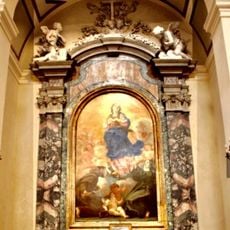
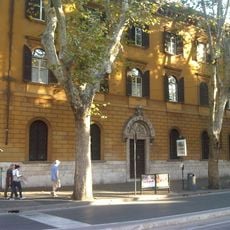
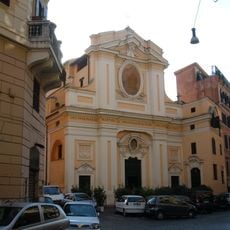
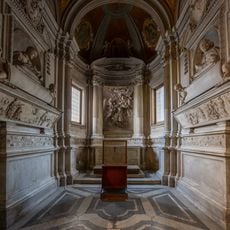
Palazzo San Callisto, Baroque palazzo in Trastevere, Rome, Italy
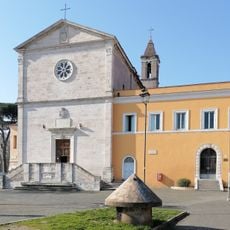
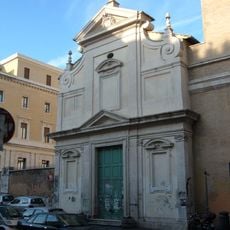
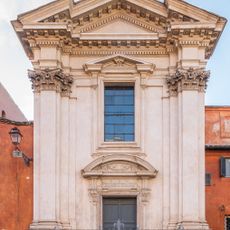
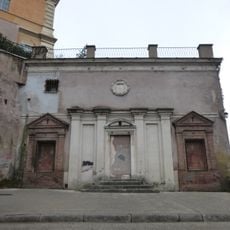
Palazzo San Callisto is a Baroque palace in Trastevere whose original block faces Piazza di Santa Maria in Trastevere, while the later extensions open onto Piazza di San Callisto. The 16th-century renovation was carried out under Cardinal Giovanni Morone by architect Orazio Torriani, and in 1936 Giuseppe Momo, designer of the Vatican Museums' double-helix staircase, added a new wing. In the courtyard stands the well where tradition holds Pope Callixtus I was martyred.
The palace was originally the residence of the titular cardinals of Santa Maria in Trastevere and was renovated in the 16th century under Cardinal Giovanni Morone by architect Orazio Torriani. Pope Paul V granted it to Benedictine monks displaced by an extension of the Quirinal Palace, and the church and convent were rebuilt between 1610 and 1618. In 1936 Giuseppe Momo, designer of the Vatican Museums' double-helix staircase, added a new wing; the Lateran Treaty of 1929 gave the complex extraterritorial status.
The building functions as an administrative center for the Catholic Church, housing papal councils that operate daily. This role makes it a place where important church decisions are made and discussed.
The building is not readily open to casual visitors since it functions as an active church administration center. You can view the Baroque facade from the street or learn more about the site's history through nearby museums and informational resources.
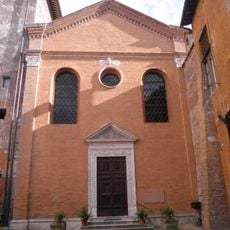
In the palace courtyard stands the well where, by tradition, Pope Callixtus I was martyred in 222; the building takes its name from the small adjacent church of San Callisto. The well sits in the courtyard, not under the palace.
The community of curious travelers
AroundUs brings together thousands of curated places, local tips, and hidden gems, enriched daily by 93,117 contributors worldwide.