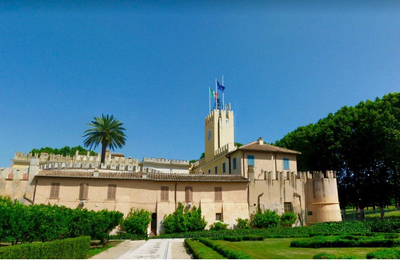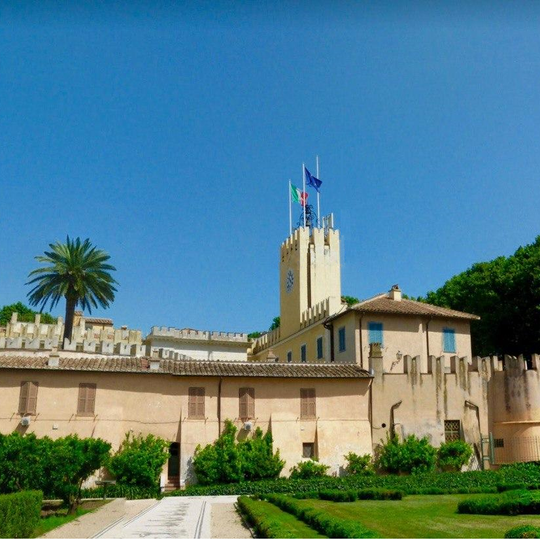
Sistema ambientale della Tenuta presidenziale di Castelporziano, Presidential estate and nature reserve in Metropolitan City of Rome, Italy.
The estate spans nearly 6,000 hectares between the capital and the Mediterranean coast, bringing together several habitats from coastal dunes to oak forests. Inside the boundaries grow large trees that are several centuries old, while open pastures and wetlands create contrast with the wooded zones.
Known since the 5th century as a possession of the Basilica of Santa Croce in Gerusalemme, the estate passed to the monks of San Saba in the 10th century, who built its first fortifications. The Del Nero family acquired it in 1586, the Grazioli in 1823, and in 1872 Quintino Sella bought it for the Italian State as a royal hunting reserve. Hunting was abolished in 1977, and in 1999 it became a state nature reserve.
The estate is one of three residences of the Italian President, alongside the Quirinal Palace and Villa Rosebery. Its name comes from a Roman fundus Procilianus, linked to a Gens Procilia. The borgo at its centre holds a small archaeological museum, a church and a carriage pavilion, while Castello Grazioli keeps halls decorated with hunting trophies.
The estate opened to the public for the first time in 2016 by decree of President Mattarella, and visits are arranged through the Quirinale. The grounds lie about 25 km from central Rome, within Municipio Roma X, and include the Capocotta coastal strip. Paths cross holm oak woods, pine forest and Mediterranean scrub, so sturdy shoes are needed.
Botanical surveys between 2013 and 2016 identified 883 plant species on the grounds, including 67 that had not been documented in this region before. This diversity makes the area a living laboratory for Mediterranean ecology and shows how protected spaces can preserve rare flora.
The community of curious travelers
AroundUs brings together thousands of curated places, local tips, and hidden gems, enriched daily by 92,839 contributors worldwide.