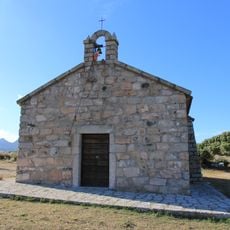
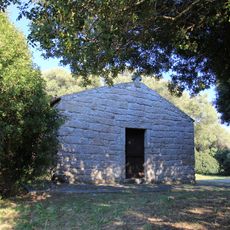
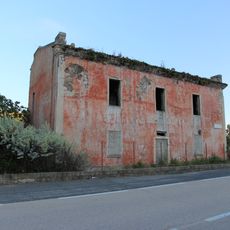
Palazzo di Baldu, Medieval palace in Luogosanto, Italy.
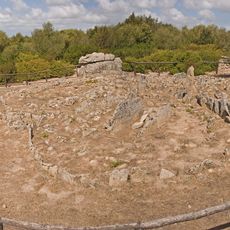
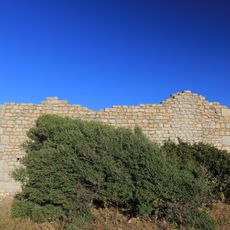
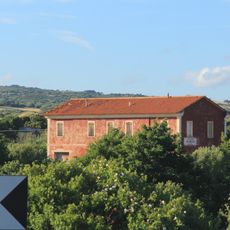
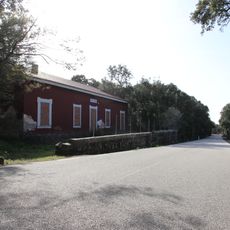
Palazzo di Baldu is a ruined square building of 9.20 metres per side in Luogosanto, with a sloping base and three surviving external walls rising at least ten metres over three floors. Its main-floor entrance, about three metres above ground, was reached by an external staircase. The masonry recalls Romanesque churches of Gallura and Corsica. It faces a courtyard of about 780 m², once ringed by sixteen rooms.
Palazzo di Baldu is first documented in the mid-14th century as part of the medieval settlement Villa de Sent Steva, in the Santo Stefano area of Luogosanto. Excavations by the Soprintendenza archeologica for Sassari and Nuoro between 1999 and 2002 uncovered the courtyard rooms and a pottery kiln about three metres across. Finds show goods arriving from Tuscany, Liguria, Spain, North Africa and the Middle East between the 12th and 15th centuries.
The site's name comes from the Baldu family, and the settlement is documented from the mid-14th century as Villa de Sent Steva. Finds show that it received goods from Tuscany, Liguria, Spain, North Africa and the Middle East between the 12th and 15th centuries. The nearby church of Santo Stefano holds a marble statue of the saint inscribed "S. STEFANVS PHROTVS MARTIR".
The site lies in a dense holm oak wood about four kilometres from Luogosanto, reached by an unpaved track, so allow time for the walk and wear sturdy shoes for uneven ground. The ruins have no facilities, and the remains of walls and floors are exposed, so visit in dry weather.
Excavations between 1999 and 2002 found pottery at the site from Tuscany, Liguria, Spain, North Africa and the Middle East, made between the 12th and 15th centuries. A kiln about three metres across for firing clay stood a short distance from the courtyard, showing that pottery was also made here.
The community of curious travelers
AroundUs brings together thousands of curated places, local tips, and hidden gems, enriched daily by 92,892 contributors worldwide.