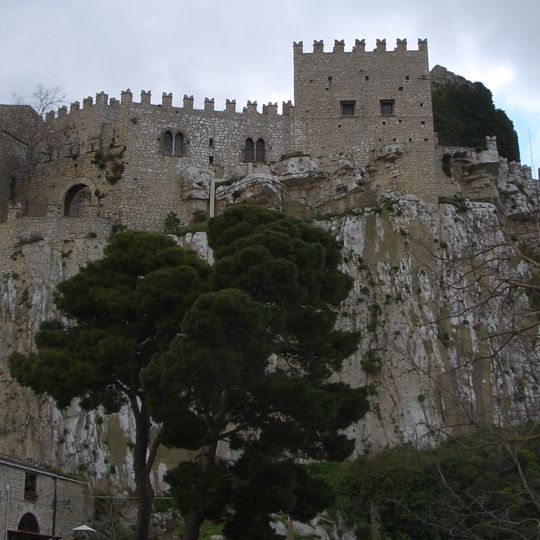
Castello di Caccamo, Norman fortress in Caccamo, Italy.
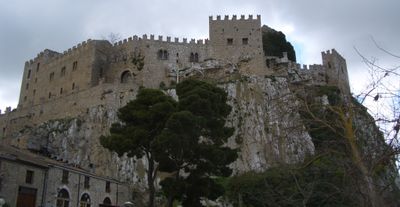
Castello di Caccamo is a Norman castle perched on a limestone cliff above the town of Caccamo in Sicily. The building follows the shape of the rock it sits on, resulting in a layout with multiple levels, towers, courtyards, and rooms that connect in unexpected ways.
The site probably held an Arab watchtower before Matthew Bonnellus gave the castle its Norman structures in the 12th century. In 1160 Norman barons met in the Sala della Congiura to plot against William I of Sicily; the revolt was stopped at once. The Chiaramontes remodelled it from the 14th century, and from 1646 the Amato dukes turned it into a residence with painted wooden ceilings until 1813.
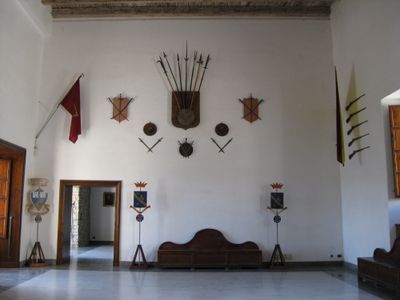
The castle's most notable room is the Sala della Congiura, where in 1160 Norman barons plotted against William I of Sicily; the rebellion was discovered and suppressed. The exhibition rooms display the arms of the families who held Caccamo, including the Amato dukes and the De Spucches, and the MAAC collection of antique weapons was installed from 2012.
The path up to the castle is steep, so sturdy shoes make the visit more comfortable. A restaurant on the ground floor of the building is available for anyone who wants to take a break before or after exploring the upper levels.
The castle's most important room is the Sala della Congiura, where in 1160 Norman barons plotted against William I of Sicily; the revolt was stopped before it began. The room keeps the name of that failed conspiracy. In the exhibition rooms, a wooden shield with a circular centre holds seven spearheads fanning upward, flanked by crossed-arrow emblems with red backing.
The community of curious travelers
AroundUs brings together thousands of curated places, local tips, and hidden gems, enriched daily by 94,009 contributors worldwide.